
Celosia
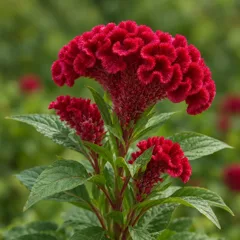
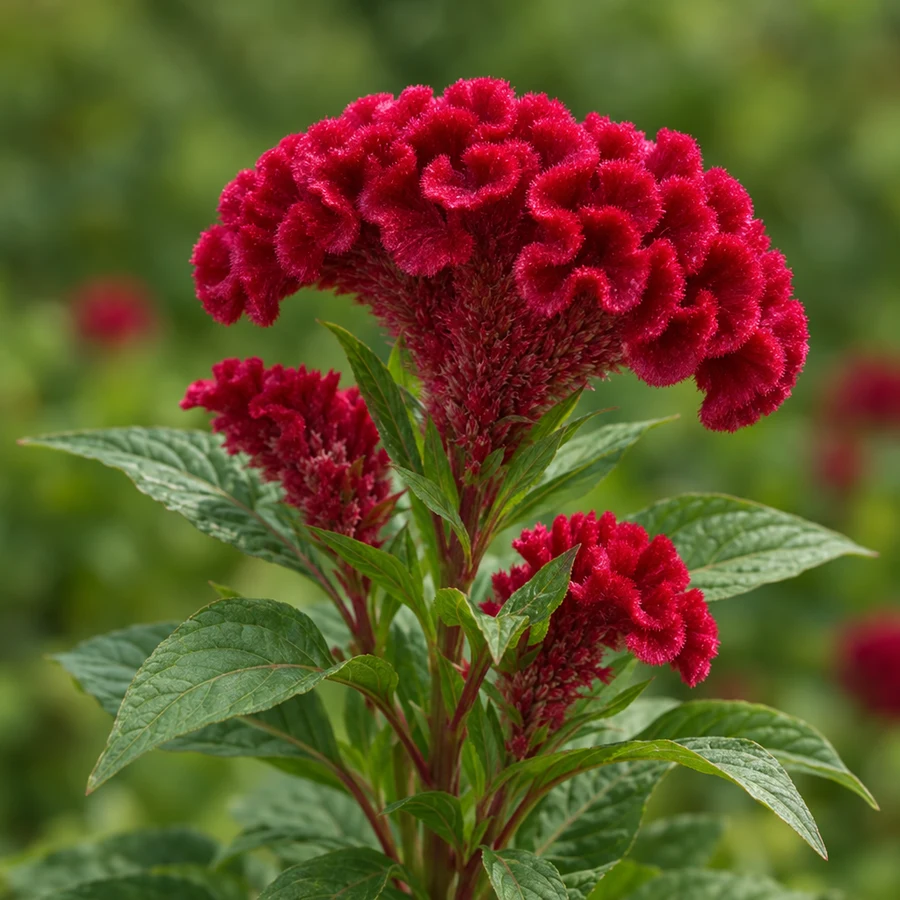
Celosia, the flower many people call cockscomb, comes in three shapes: velvety folded crests that really do look like a rooster's comb, soft upright plumes like little flames, and slim pointed spikes. The colors are loud and cheerful, from scarlet and orange to hot pink, gold and deep purple. It loves heat, shrugs off dry spells, and is one of the best flowers in the garden for cutting and drying.
Recent community discussions
No one has talked about Celosia yet. Be the first.
At a glance
| Plant type | Warm-season flower |
| Botanical name | Celosia argentea (cockscomb, plumed celosia, wheat celosia) |
| Annual or perennial | Annual (tender perennial in zones 10 to 11) |
| Sun | Full sun |
| Water | Moderate, about 1 inch per week |
| Spacing | Dwarf types 6 to 8 inches; bedding types 8 to 12 inches; tall cut-flower types 18 to 24 inches or more |
| Planting depth | Barely cover (about 1/8 inch) |
| Days to germinate | 7 to 14 at 75 to 80°F |
| Days to maturity | Counted from sowing: tall plume and crested cut types 90 to 120 days to bloom; wheat types such as Flamingo Feather about 90 to 95; dwarf bedding types sooner (check the packet) |
| Best USDA zones | 2 to 11 as an annual |
| Soil pH | 6.0 to 7.0 |
Is it celosia weather where you are? See everything to plant this month or read your zone notes.

Sow indoors 6–8 weeks before last frost. Transplant outdoors after danger of frost. Direct sow not recommended in short-season climates.

Germinates in 7–14 days; matures in 90–120 days; blooms continuously.

Zones 2–11, June?October; in warm zones (9–11) September?November or perennial; indoors year-round.

Well-drained sandy soils, pH 6.0–7.5. Prefers moderately fertile, evenly moist conditions.
Pests to watch for




Diseases

A little history
Botanists place celosia's wild home in tropical Africa, and the folded cockscomb form is thought to have been selected in India. Crested plants reached European gardens around 1570, and the silvery plumed species was on record there by about 1740. It crossed the Atlantic early too: cockscomb seed was sent to a Williamsburg garden in the late 1730s, and Thomas Jefferson grew it in Virginia in 1767. By Victorian times it was a fixture of the bright summer bedding schemes in parks and front gardens. In parts of Africa and Asia, the young leaves are still cooked as a green.
When to sow in your zone
Spring: Start seeds indoors 4 to 6 weeks before your last frost. That's a short head start for such a slow flower, and it's on purpose: celosia left too long in small cells gets potbound, and potbound seedlings stay stunted and bloom early on short stems. Set them out while they're still young, with just a few true leaves. Or sow outdoors once the soil is warm (about 70°F) and nights stay above 60°F. Cooler nights than that stunt the plants and push them to flower too soon.
Late summer: In zones 9 to 11, a second sowing gives fall color.
To find your last frost and celosia's sowing months, start with when to sow celosia in your zone, then count back from your last frost.
Growing it, step by step
From seed
Sprinkle seed thinly and barely cover it (about 1/8 inch). Keep it warm (75 to 80°F) and moist until it sprouts. Clean trays and fresh mix help prevent damping-off.
Moving it outside
Move seedlings while they're small and handle the root ball gently. Celosia sulks if its roots are disturbed or it gets rootbound. Harden them off for a week first, and give each type the spacing in the table above.
Water
Water deeply once a week at the base of the plant; it tolerates some dryness once established. Keep young transplants evenly moist, since drought stress can stunt them the same way cold does.
Mulch
A light mulch keeps weeds down.
Feeding
A balanced fertilizer at planting is enough, and a little extra phosphorus helps flowering. Too much nitrogen means leaves instead of flowers.
Keeping it happy
Pinch young branching plume types once to encourage more stems. Don't pinch single-stem cut types such as Bombay, which make one big head per plant. Deadhead spent blooms on branching types to keep them flowering. Tall varieties may need staking.
Trouble in the bed
- Spider mites: Hose off foliage in hot, dry weather.
- Aphids: Spray off with water or use insecticidal soap.
- Thrips: Look for silvery streaks on leaves and flowers; blast them off with water.
- Damping-off: Seedlings collapse at the soil line. See damping-off.
- Leaf spot: Brown spots on the leaves, worse with overhead watering. See Alternaria leaf spot.
- Root rot: Avoid soggy soil and heavy, poorly drained beds.
Good neighbors






Good: Zinnias, marigolds, gomphrena, and other heat-loving annuals. Plant near vegetables to draw pollinators.
Avoid: Shady, wet spots.
Seeds that grow well in your area in November
Affiliate links — shopping through these helps keep Evening Vines free. Royal Mix
 Johnny Jump Up
 Organic Cat Grass
 Arugula Microgreens
Varieties worth growing
- Celway series: Tall plumes for cutting.
- Chief series: Big crested heads.
- Bombay series: Crested cut flowers with narrow, fan-shaped heads on single stems.
- Flamingo Feather: Pink wheat-type spikes.
- Forest Fire: Scarlet plumes over dark, bronze-tinged leaves.
- Fresh Look: Compact plumes for beds and pots.
Picking notes
Cut stems for fresh flowers when the blooms are fully colored. To dry, cut at peak color, strip the leaves, and hang upside down somewhere dark and airy.
Saving seed for next year
Rub dry flower heads over a paper bag to collect the tiny black seeds. More on that in saving seeds from your garden.
From garden to table
Grown mainly for bedding, cut flowers, and dried arrangements. Young leaves of some types are eaten as greens in Africa and Asia.
Questions from the potting bench
Why aren't my celosia growing? Usually cold: soil that isn't truly warm, or nights below 60°F. Seedlings that sat too long in small pots can also stall. Wait for real warmth and plant out young.
Will celosia come back next year? Not in most zones, but it often self-seeds. It can live on as a perennial in zones 10 to 11.
Can I grow celosia in containers? Yes, compact types do very well in pots.
Grower reports
How did Celosia do in your garden? Members rate it and say which zone and month they planted, so everyone can see what works near them.
Recent community discussions
No one has talked about Celosia yet. Be the first.
Essentials for Growing Celosia
 Grow Bags
Breathable fabric pots: grow almost anything on a patio, balcony or driveway, and roots never circle.
See it →
 Pruning Shears
Sharp bypass pruners for harvesting, deadheading and tidying.
See it →
 Seed Starting Tray
Reusable tray with a clear dome to give seeds a warm, humid start indoors.
See it →
 Garden Kneeler
A kneeling pad that flips into a seat: easier on knees and back.
See it →
 Plant Labels
Waterproof markers so you know what's coming up where.
See it →
 Organic Fertilizer
Slow-release organic plant food for vegetable beds and containers.
See it →
