
Cauliflower
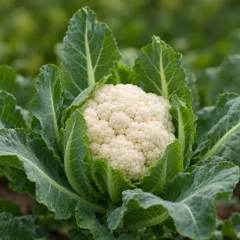
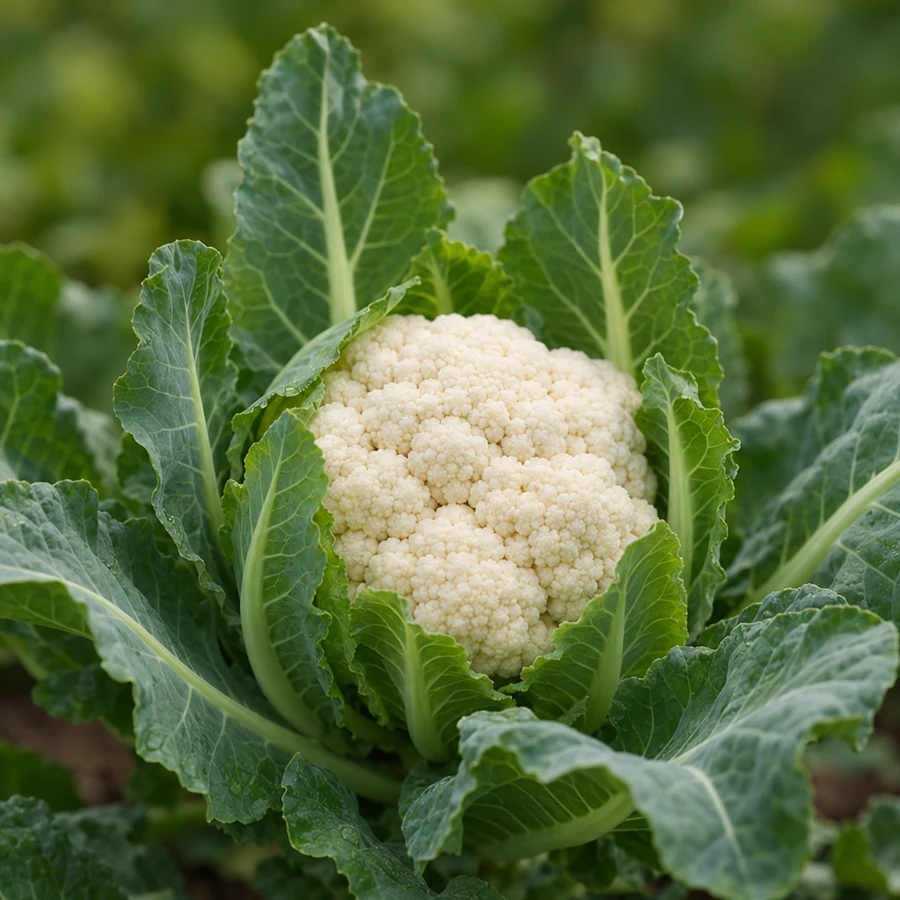
The head you cut from a cauliflower is a tight knot of flower buds, packed so close they never get the chance to open. White is the classic, but there are purple, orange and lime-green heads too. The plant only builds a good one while it keeps growing at an even pace: cool days, moist soil and plenty of food. Hold it back with a hot week, a dry bed or a seedling left too long in its tray, and it gives up early with a small, loose head the size of a coin. Growers call that buttoning. Nearly every note on this page comes back to one rule: keep it moving.
When to plant cauliflower depends on your frost dates, so start with your zone page and count back from your last frost. It is the same species as broccoli, cabbage and kale, so it shares their pests, their diseases and their spot in the rotation.
Recent community discussions
No one has talked about Cauliflower yet. Be the first.
At a glance
| Plant type | Cool-season vegetable (brassica) |
| Botanical name | Brassica oleracea var. botrytis |
| Annual or perennial | Annual |
| Sun | Full sun |
| Water | 1 to 1.5 inches per week, evenly |
| Spacing | 18 to 24 inches |
| Planting depth | 1/4 to 1/2 inch |
| Days to germinate | 5 to 10 |
| Days to maturity | About 50 to 100 from transplant |
| Best USDA zones | 2 to 11 as a seasonal crop |
| Soil pH | 6.0 to 7.0 |
From planting to harvest
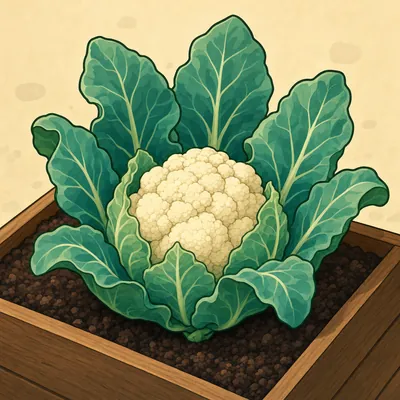
Is it cauliflower weather where you are? See everything to plant this month or read your zone notes.

Start indoors 6–8 weeks before last frost, transplant 2–4 weeks before last frost. For fall crop, sow midsummer 6–8 weeks before first frost.

55–100 days.

Zones 3–9, late spring?early summer when heads are firm and compact.

Fertile, moisture-retentive clay loam, pH 6.0–7.0. Requires steady watering and compost.
Pests to watch for

Diseases

A little history
Cauliflower was selected from the wild cabbage of the Mediterranean coast, the same plant that gave us broccoli and kale. Arab writers of the 1100s and 1200s, Ibn al-'Awwam and Ibn al-Baitar, described it and said it came from Cyprus. By the late 1400s it was growing in Italy, brought by Genoese traders from Cyprus or the eastern Mediterranean, and it reached France by way of Genoa in the 1500s. It stayed a rare garden plant there for a long while and only became a familiar vegetable on French tables in the later 1600s.
Source note: Maggioni, von Bothmer, Poulsen and Branca, "Origin and Domestication of Cole Crops (Brassica oleracea L.): Linguistic and Literary Considerations," Economic Botany (2010).
When to sow in your zone
Spring: Start seeds indoors 4 to 6 weeks before your last frost and set the young plants out 2 to 4 weeks before the last frost, so the heads form before summer heat arrives. Our post on starting cabbage and broccoli indoors works the same way for cauliflower.
Fall: Sow in midsummer, about 10 to 12 weeks before your first fall frost. Fall plantings are usually the most reliable, because the heads fill out as the weather cools. See start your fall garden in July.
Mild winters: In zone 9, zone 10 and zone 11, sow in late summer and fall and grow it through the winter.
Growing it, step by step
At the potting bench
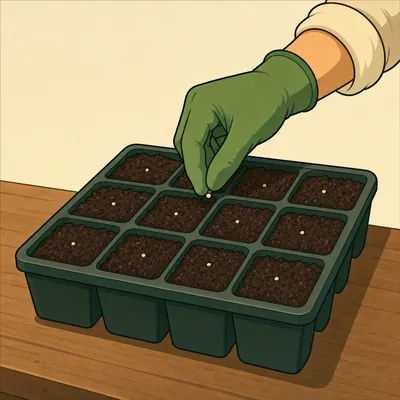
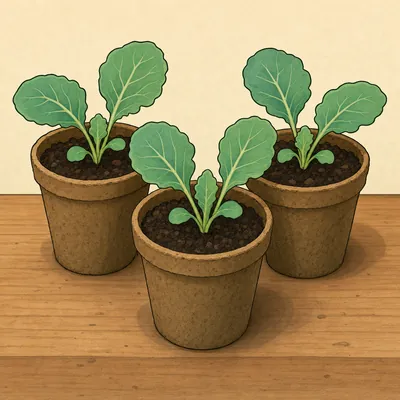
Sow 1/4 to 1/2 inch deep in cell trays at about 70°F. Once they sprout, grow the seedlings cool and bright.
Into the bed
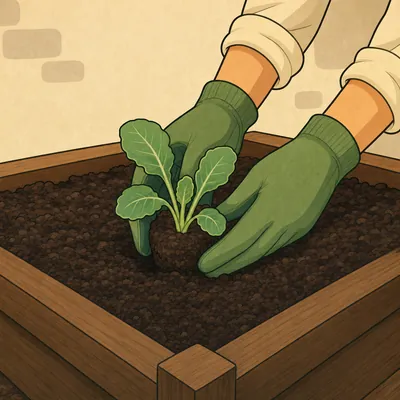
Give it fertile soil that drains well but still holds moisture, with plenty of compost worked in. Harden off for a week and plant out at 4 to 6 weeks old. Don't let seedlings sit rootbound in their cells, as that is a common cause of buttoning.
The watering can
Keep the soil evenly moist. Dry spells are the main cause of poor heads.
A blanket of mulch
Mulch well to keep the roots cool and damp.
Feeding
Work in compost before planting and side-dress with a nitrogen-rich fertilizer 3 to 4 weeks after transplanting.
Keeping it happy
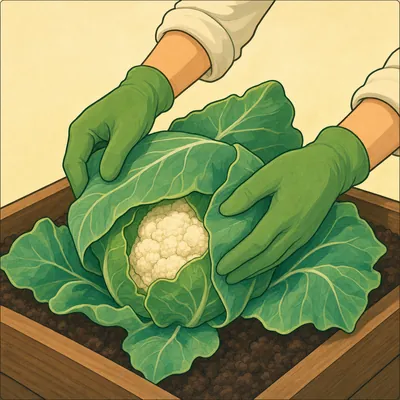
Once the curd is about 2 to 3 inches across, fold the outer leaves up over it and tie them loosely to keep it white. Self-blanching and colored varieties don't need this. Move brassicas to a new bed each year; our crop rotation plan shows how.
Trouble in the bed
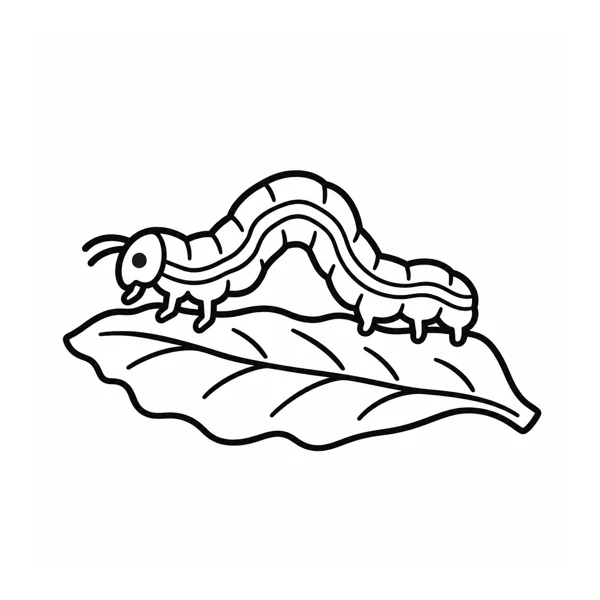
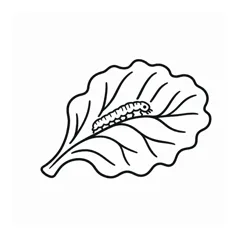
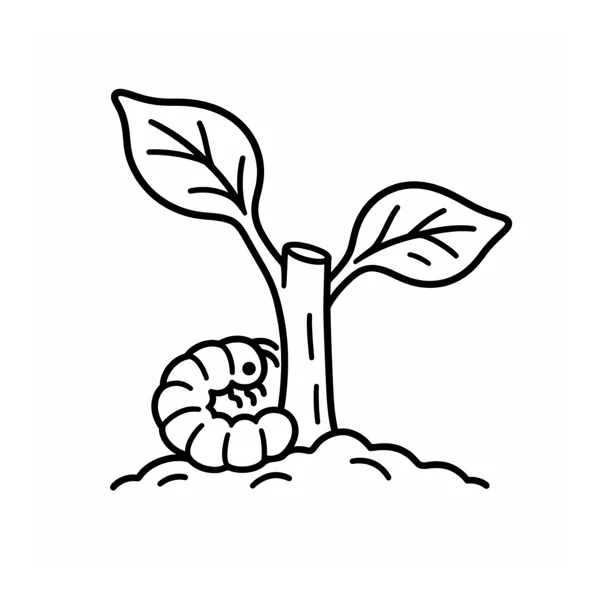
- Cabbage worms and loopers: Use row cover or Bt.
- Aphids: Spray off with water or use insecticidal soap.
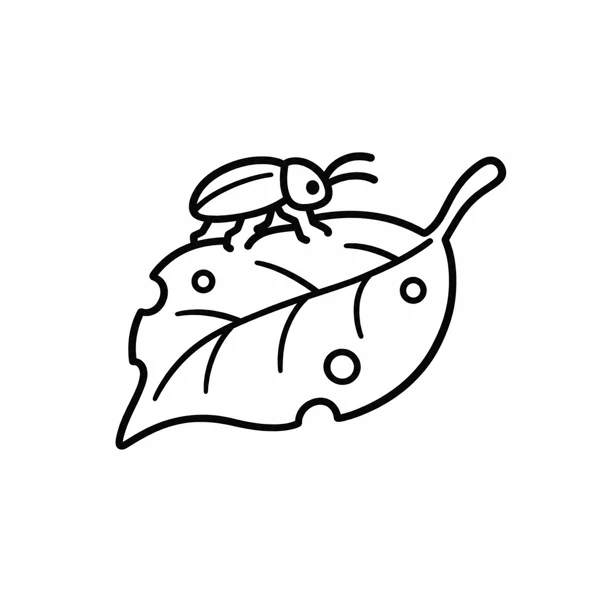
- Flea beetles: Cover young plants with row cover.
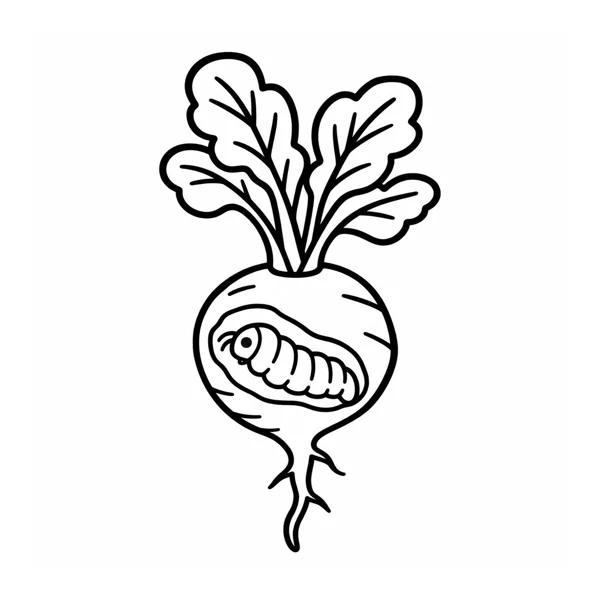
- Clubroot: Rotate crops and lime the soil to raise the pH to about 7.2. See clubroot.
- Black rot: Yellow, V-shaped patches that start at the leaf edge. Start with clean seed and rotate. See black rot.
- Alternaria leaf spot: Dark spots with rings, like a target. Clear away old leaves at the end of the season. See alternaria leaf spot.
- Downy mildew: Yellow patches on top of the leaves with gray fuzz underneath, worst in cool, damp weather. Space plants for good airflow. See downy mildew.
- Buttoning: Avoid stress, rootbound seedlings and cold snaps right after planting.
Tidy up spent plants in fall to keep diseases from overwintering: clean up diseased plants in fall.
Good neighbors








Good: Onions, celery, dill, beets, chamomile, and nasturtiums as a trap crop.
Avoid: Strawberries, tomatoes, and other brassicas in the same spot year after year.
Seeds that grow well in your area in November
Affiliate links — shopping through these helps keep Evening Vines free. Wild Lupine
 Common Milkweed
 PansySeeds
 PhloxSeeds
Varieties worth growing
- Snow Crown: Fast, forgiving, and good for beginners.
- Amazing: Self-wrapping leaves, and copes with warm spells better than most.
- Graffiti: Bright purple heads.
- Cheddar: Orange heads rich in beta-carotene.
- Romanesco Veronica: Green, spiraling, fractal heads.
Cauliflower seeds to buy
Affiliate links — shopping through these helps keep Evening Vines free.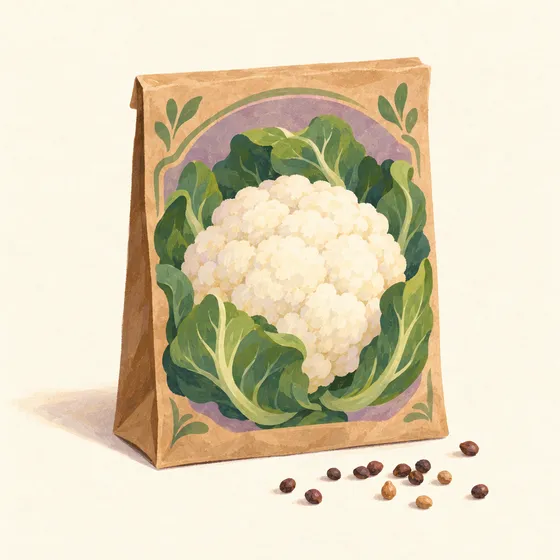 Snowball Y Improved
Picking notes
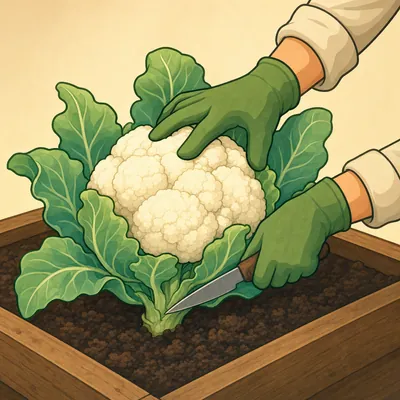
Cut the head when it is full and firm, usually 6 to 8 inches across, before the curds begin to separate. Check daily once heads form, because they pass their best quickly in warm weather. Spring plantings are usually ready in late spring or early summer, fall plantings through the fall, and in zones 9 to 11 you can keep cutting through winter. More on timing in harvest at the right time.
Saving seed for next year
Cauliflower crosses with other Brassica oleracea crops and needs a long season to flower, so seed saving is best left to experienced growers.
From garden to table
Cauliflower is very high in vitamin C, with useful vitamin K and some fiber. Roast it, steam it, mash it, rice it, or eat it raw.
Questions from the potting bench
Why are my cauliflower heads tiny? Buttoning, usually from heat, drought, or rootbound transplants.
Why did my cauliflower turn yellow? Sunlight. Tie the leaves over the head to keep it white.
Can I grow cauliflower in a container? Yes, one plant per pot at least 18 inches wide.
Grower reports
How did Cauliflower do in your garden? Members rate it and say which zone and month they planted, so everyone can see what works near them.
Recent community discussions
No one has talked about Cauliflower yet. Be the first.
Seeds to try
Affiliate links — shopping through these helps keep Evening Vines free.Essentials for Growing Cauliflower
 Grow Bags
Breathable fabric pots: grow almost anything on a patio, balcony or driveway, and roots never circle.
See it →
 Insect Netting
Fine mesh that keeps cabbage worms, flea beetles and birds off your crops, no sprays needed.
See it →
 Frost Cloth
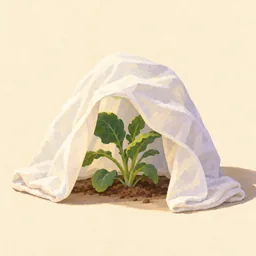
Throw it over young plants on cold spring and fall nights.
See it →
 Garden Hand Tools
Trowel, transplanter and cultivator: the three tools you reach for most.
See it →
 Plant Labels
Waterproof markers so you know what's coming up where.
See it →
 Organic Fertilizer
Slow-release organic plant food for vegetable beds and containers.
See it →
