
Radishes
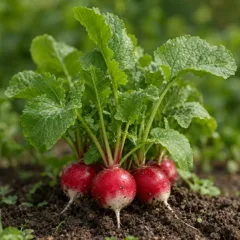
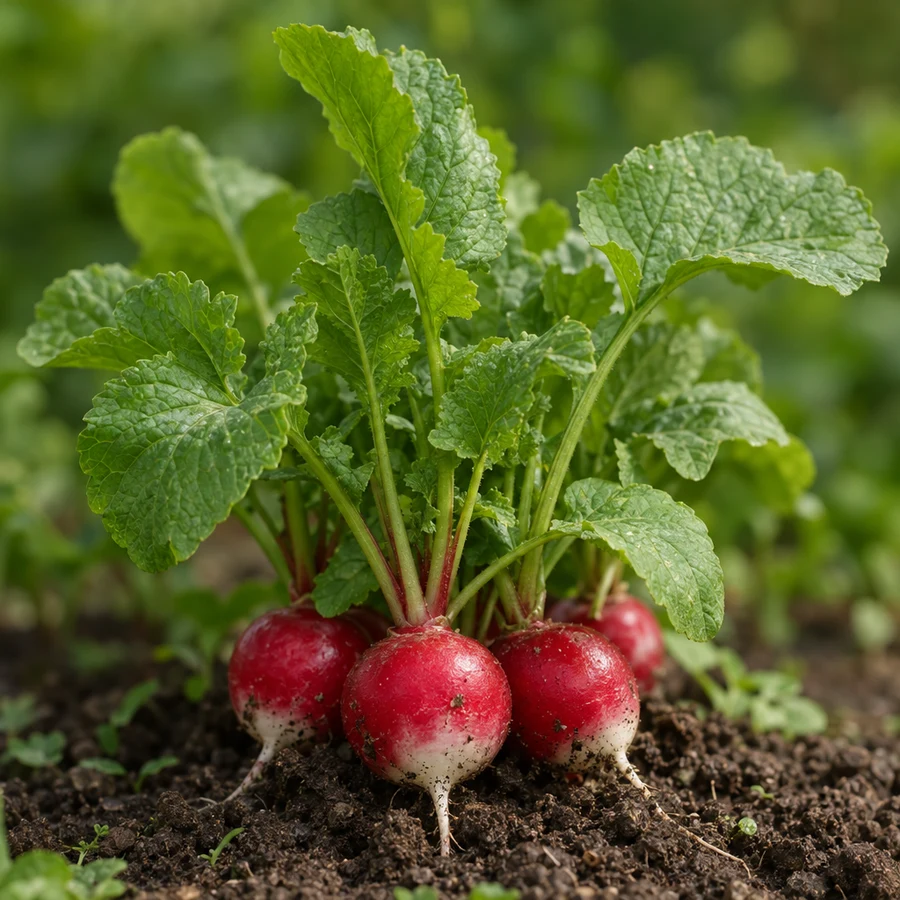
If you want to pull something you grew yourself as soon as possible, sow radishes. Most spring radishes are ready three to five weeks after the seed goes in. They like cool weather and evenly moist soil, and they reward you with a crisp, peppery crunch. Winter radishes and daikon are the slow cousins: they take two months or more and grow much bigger roots.
Recent community discussions
No one has talked about Radishes yet. Be the first.
At a glance
| Plant type | Vegetable |
| Botanical name | Raphanus sativus |
| Annual or perennial | Annual |
| Sun | Full sun to part shade |
| Water | About 1 inch per week |
| Spacing | 1 to 2 inches (4 to 6 inches for winter types) |
| Planting depth | 1/2 inch |
| Days to germinate | 3 to 7 days |
| Days to maturity | 22 to 30 days (spring types); 50 to 70 days (daikon and winter types) |
| Best USDA zones | 2 to 10 |
| Soil pH | 6.0 to 7.0 |
From planting to harvest
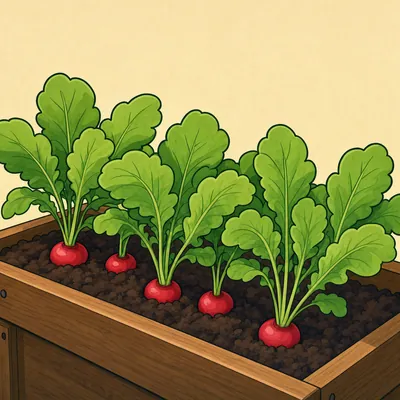
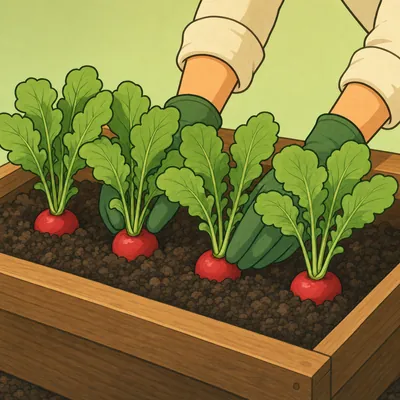
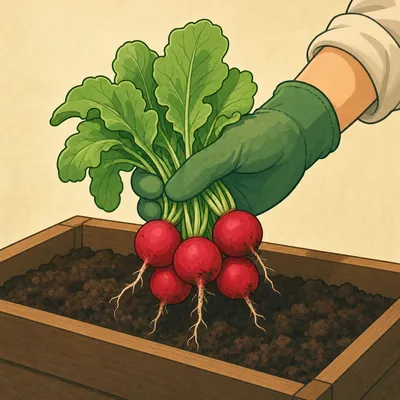
Is it radishes weather where you are? See everything to plant this month or read your zone notes.

Direct sow 4–6 weeks before last frost, repeat every 2 weeks for succession. In warm zones, sow again in fall/winter.

3–6 weeks.

Zones 2–9, May?June for spring plantings; Sept?Oct for fall.

Loose, well-drained sandy loam, pH 6.0–7.0. Needs friable, stone-free soil.
Pests to watch for




A little history
Radishes are an old crop. They were an important food in ancient Egypt by about 2000 BC and were later grown in Greece and Rome. Gardeners across Europe and Asia went on to breed them into many colors, sizes and shapes, from little red globes to long white daikon.
When to sow in your zone
Spring: Sow outdoors 4 to 6 weeks before your last frost date, once the soil can be worked. Our post on how to count back from your last frost shows how to find that date. For a steady supply, sow a short row every 7 to 10 days, and stop once days are regularly above about 70°F, because heat makes radishes bolt and turn hot.
Fall: Sow spring types 4 to 6 weeks before your first fall frost. Winter radishes and daikon need 7 to 10 weeks, so sow them in late summer.
By zone: In zones 3 to 7 there are two windows, early spring and late summer into fall. In zones 8 to 10, skip summer and sow from fall right through late winter. Find your zone on the zones page, or go straight to your hub: zone 3, zone 4, zone 5, zone 6, zone 7, zone 8, zone 9, zone 10. For a spring sowing walk-through, see sow radishes in spring.
Growing it, step by step
From seed
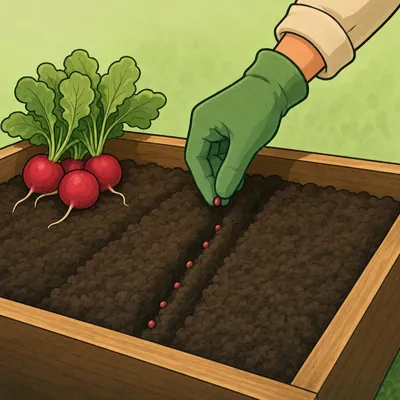
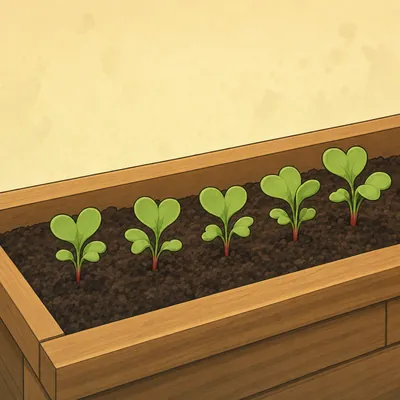
Sow 1/2 inch deep, about an inch apart. When the seedlings are up, thin spring types to 1 to 2 inches apart and winter radishes and daikon to 4 to 6 inches. Crowded radishes make leaves instead of roots, so don't skip this step. Our thinning seedlings post covers how.
Moving it outside
Don't. Sow radishes where they will grow. A disturbed root grows forked or stunted.
Water
Keep the soil evenly moist, about an inch of water a week. Dry spells make the roots woody and hot.
Mulch
A thin layer of straw between rows keeps the soil cool and holds in moisture.
Feeding
They need very little. Too much nitrogen gives you big tops and small roots.
Keeping it happy
Weed gently so you don't disturb the shallow roots. Put row cover on at sowing time to keep flea beetles and root maggot flies off. Short on space? Tuck a row of radishes between slower crops such as carrots or parsnips. The radishes are pulled before their neighbors need the room. Pull them as soon as they're ready, because they turn pithy fast. Rotate beds, and don't sow radishes where other cabbage-family crops grew last year. Our crop rotation plan shows how to keep the family moving.
Trouble in the bed
- Flea beetles: Tiny jumping beetles that pepper the leaves with small holes. Cover the row with floating row cover from sowing.
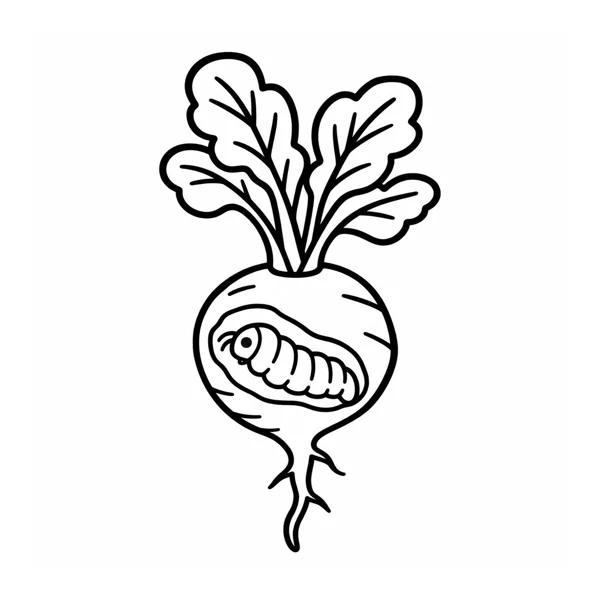
- Cabbage root maggot: "Root maggot" and "cabbage maggot" are names for the same pest. The fly lays eggs at the base of the plant, and the larvae tunnel into the roots. Use row cover from sowing, rotate beds, and pull and throw away tunneled roots.
- Aphids: Knock them off with a strong spray of water, or use insecticidal soap.
- Clubroot: Roots swell and distort and plants wilt. It's worst in acid soil. Keep the pH near 7 and keep cabbage-family crops out of that bed for several years.
- Black rot: Leaves yellow and wilt, with blackened veins. It's bacterial, often arrives on seed and spreads in splashing water, so sprays won't cure it. Water at the soil, pull cabbage-family weeds, and pull and remove infected plants.
- Alternaria leaf spot: Dark spots with rings on the leaves. Give plants room and rotate beds.
- Downy mildew: Yellow patches on top of the leaves with gray fuzz underneath, most often in cool, damp weather. Thin for airflow and water in the morning.
Good neighbors

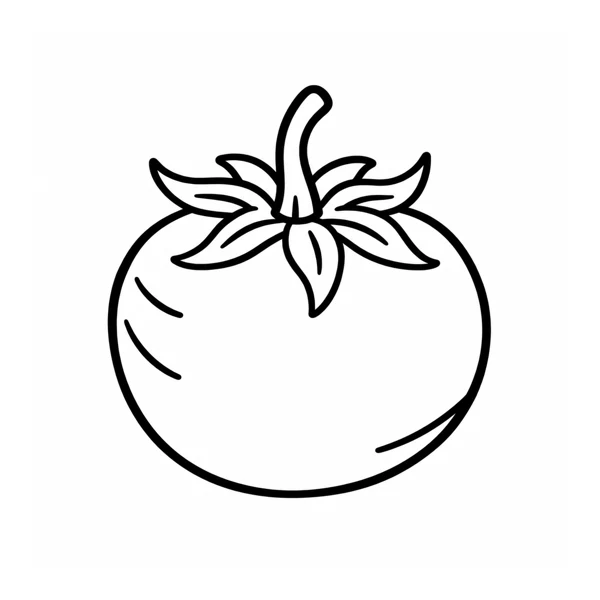

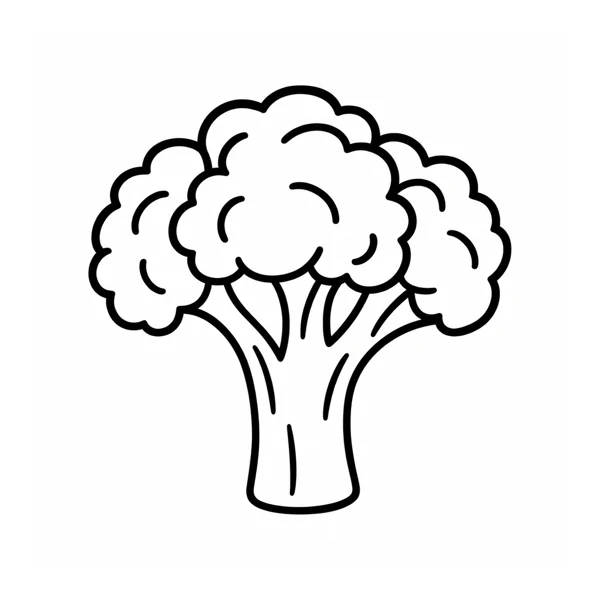
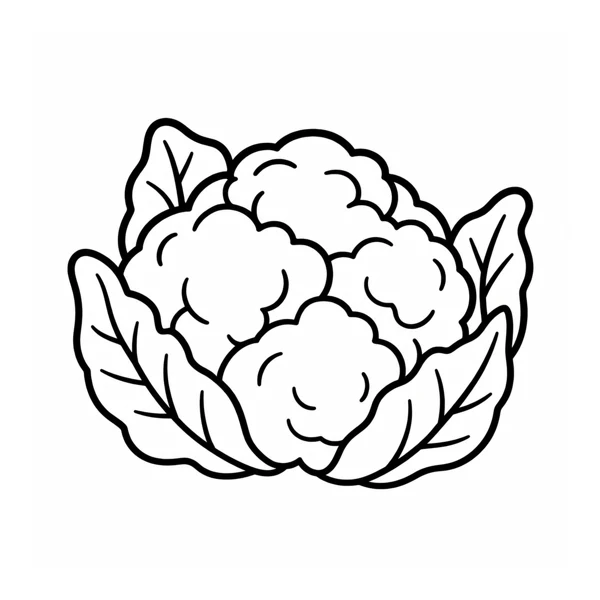
Good: Carrots, lettuce, peas, spinach, and cucumbers.
Avoid: Sowing right beside cabbage, broccoli, or cauliflower, or following any cabbage-family crop in the same bed. They share flea beetles, root maggots, and clubroot.
Seeds that grow well in your area in November
Affiliate links — shopping through these helps keep Evening Vines free. Smooth Blue Aster
 Polka Dot Mix
 Black-Eyed SusanSeeds
 ColumbineSeeds
Varieties worth growing
- Cherry Belle: Round, red, and quick. Seeds
- French Breakfast: Long red roots with white tips. Seeds
- Easter Egg: A mix of pink, purple, red, and white roots. Seeds
- Black Spanish Round: A large winter radish with black skin and white flesh.
- Daikon: A long white Asian winter radish, mild and juicy. Seeds
- Watermelon: A winter radish with pale green and white skin and rosy pink flesh. Seeds
Radishes seeds to buy
Affiliate links — shopping through these helps keep Evening Vines free.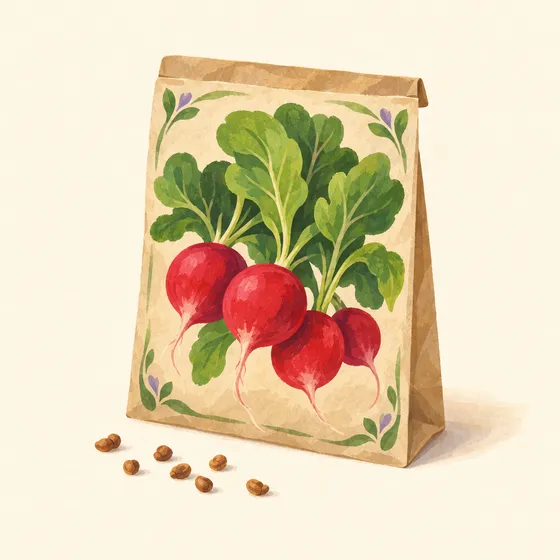 Daikon
Picking notes
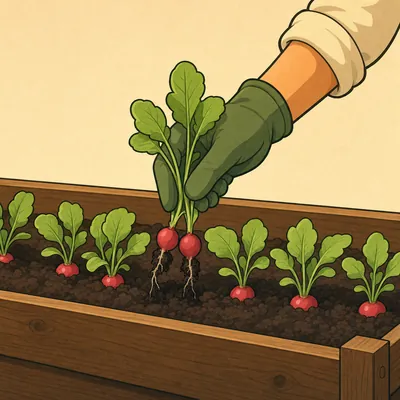
Spring types are ready 3 to 6 weeks after sowing. Winter radishes and daikon take 7 to 10 weeks. Pull spring radishes when the roots are about 1 inch across. Brush soil off the shoulder to check the size. In zones 3 to 7, the spring crop comes in from about mid-April to June and the fall crop in September and October. In zones 8 to 10, harvest in late winter and early spring, and again in November and December. Young leaves are good to eat too.
Saving seed for next year
Let a few plants bolt and form pods. Harvest when the pods are dry and brown, then thresh and store the seed cool and dry. Radishes cross with each other, daikon included, so only let one variety flower if you plan to save seed.
From garden to table
Radishes are low in calories and give you some vitamin C. Eat them raw, roast them for a milder flavor, or pickle them. The young green seed pods are good to eat too.
Questions from the potting bench
Mine taste fiery and feel like cork. What went wrong? Usually heat, dry soil, or leaving them in the ground too long.
Lots of leaves but nothing underneath. Why? Too much nitrogen, seedlings left too close together, or warm weather.
Will they grow in a pot on the porch? Yes. Spring types grow in a pot at least 6 inches deep. Daikon and other long winter types need a much deeper container.
Grower reports
How did Radishes do in your garden? Members rate it and say which zone and month they planted, so everyone can see what works near them.
Recent community discussions
No one has talked about Radishes yet. Be the first.
Seeds to try
Affiliate links — shopping through these helps keep Evening Vines free.Essentials for Growing Radishes
 Grow Bags
Breathable fabric pots: grow almost anything on a patio, balcony or driveway, and roots never circle.
See it →
 Insect Netting
Fine mesh that keeps cabbage worms, flea beetles and birds off your crops, no sprays needed.
See it →
 Frost Cloth
Throw it over young plants on cold spring and fall nights.
See it →
 Garden Hand Tools
Trowel, transplanter and cultivator: the three tools you reach for most.
See it →
 Plant Labels
Waterproof markers so you know what's coming up where.
See it →
 Organic Fertilizer
Slow-release organic plant food for vegetable beds and containers.
See it →
