
Snapdragons
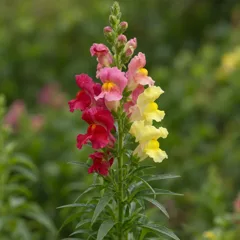
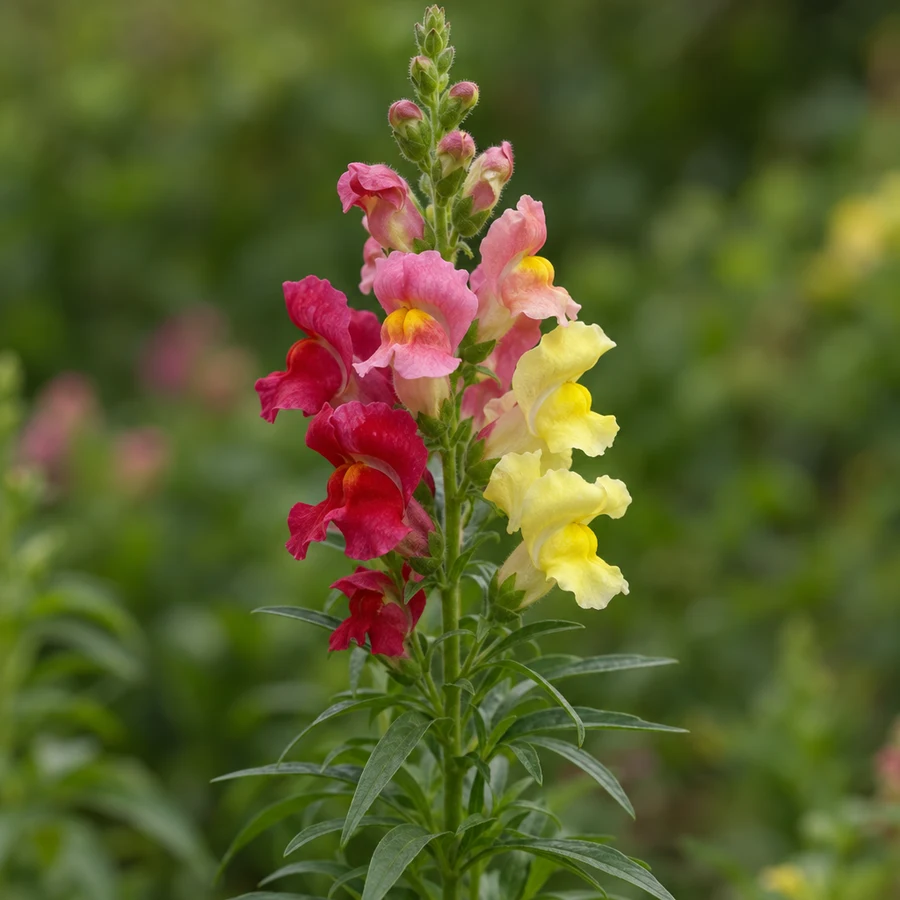
Snapdragons send up tall spikes of jaw-shaped flowers in nearly every color but true blue. They are cool-weather plants that sulk in summer heat, and they make some of the best cut flowers you can grow from a packet of seed. Give them fertile, well-drained loam and plenty of sun.
When they flower: In cold-winter areas, expect blooms from late spring until frost, often with a rest in the hottest part of summer. In mild-winter areas (zones 8 to 10), a fall planting flowers from late winter into early summer.
Recent community discussions
No one has talked about Snapdragons yet. Be the first.
At a glance
| Plant type | Flower |
| Botanical name | Antirrhinum majus |
| Annual or perennial | Short-lived perennial, usually grown as an annual |
| Sun | Full sun to light shade |
| Water | Regular, even moisture |
| Spacing | 6 to 12 inches |
| Planting depth | Surface (needs light) |
| Days to germinate | 7 to 14 days |
| Days to maturity | About 70 to 110 days to bloom, depending on type (tall cut-flower kinds are slowest) |
| Best USDA zones | 7 to 10 (sometimes 11) as a short-lived perennial; annual everywhere |
| Soil pH | Slightly acidic to neutral, about 6.0 to 7.0 |
Is it snapdragons weather where you are? See everything to plant this month or read your zone notes.

Sow indoors 8–10 weeks before last frost; transplant outdoors in cool weather. In mild zones, sow in fall for winter/spring bloom.

Germinates in 7–14 days; blooms in 70–100 days.

Zones 7–11 perennials, 2–6 annuals; April?Oct; in warm zones bloom Mar?July.

Fertile, well-drained silty loam or loam, pH 6.2–7.0. Needs consistent moisture; dislikes waterlogging.
Pests to watch for




Diseases



A little history
Snapdragons are native to the Mediterranean, where they still grow wild on old walls and rocky slopes. The common name comes from a trick every child learns: squeeze the sides of a flower and the "jaw" opens and closes like a little dragon's mouth.
They have a long history in American gardens too. Thomas Jefferson noted snapdragon in bloom at Shadwell, his boyhood home, in late May of 1767. A few years later, in 1771, he listed it among the flowers he hoped to naturalize in the open ground at Monticello. Over the following centuries breeders turned the wild plant into the tall cutting series, doubles and dwarf bedding types we grow today.
When to sow in your zone
Spring: If you want to know how to grow snapdragons from seed, start early. Sow indoors 8 to 10 weeks before your last frost (our count back from last frost post walks you through the math). Plant out around 1 to 2 weeks before the last frost, once the seedlings are hardened off. Young plants shrug off a light frost, but cover them if a hard freeze is forecast. Fall: When to plant snapdragons depends a lot on where you live. In zones 8 to 10 (and frost-free 11), fall is the main season: plant in fall for flowers from late winter through spring. Snapdragons in zone 9, for example, do far better planted in October or November than in spring. In colder zones, set out sturdy starts in early fall for a little late color.
Not sure of your frost dates? Find your zone on the zones page to see when to sow in your area.
Growing it, step by step
From seed
The seed is as fine as dust. Press it onto the surface of moist mix and don't cover it, because it needs light to sprout. Keep it around 65 to 70°F and it should come up in 1 to 2 weeks.
Moving it outside
Harden off and plant out in cool weather. Space plants 6 to 12 inches apart, closer for dwarf bedding kinds and wider for tall cutting types.
Water
Keep soil evenly moist. Water at the base of the plants and keep the leaves dry.
Mulch
Add 1 to 2 inches of mulch to keep roots cool and moist.
Feeding
Mix compost into fertile, well-drained loam at planting. Feed lightly once a month.
Keeping it happy
Pinch young plants once they have a few pairs of leaves for bushier growth. Deadhead spent spikes for more blooms. Stake tall types before they flop. In hot summers, shear plants back after the first flush and they will often flower again when nights cool off.
Rust is the disease to watch for. Its spores travel on the wind, so moving plants around won't keep it away. Instead, pull out infected plants and clear away fallen leaves and debris, water at the base, space plants so air can move between them, and grow rust-resistant types.
Trouble in the bed
- Snapdragon rust: Brown, powdery spots on the undersides of leaves. Remove infected plants and debris, water at the base, give plants room, and choose resistant types. More on our rust page.
- Downy mildew: Yellowing leaves with gray-purple fuzz underneath, worst in cool, damp weather. Improve airflow and remove infected plants. See downy mildew.
- Powdery mildew: White coating on leaves, usually later in the season. Space plants and avoid wetting the leaves. See powdery mildew.
- Aphids: Spray off with a strong stream of water or use insecticidal soap.
Good neighbors




Good: Other cool-season flowers such as pansies, dianthus, larkspur and stock. Avoid: Hot, humid spots and crowded beds.
Seeds that grow well in your area in November
Affiliate links — shopping through these helps keep Evening Vines free. Moonbeam
 Foxglove Mix
 Rocket Larkspur
 Wild Lupine
Varieties worth growing
- Rocket: Tall spikes for cut flowers.
- Madame Butterfly: Double, azalea-like flowers.
- Floral Showers: Compact series for beds and pots.
- Liberty: Medium-height series, good for cutting.
- Chantilly: Tall series with large flowers.
Snapdragons seeds to buy
Affiliate links — shopping through these helps keep Evening Vines free.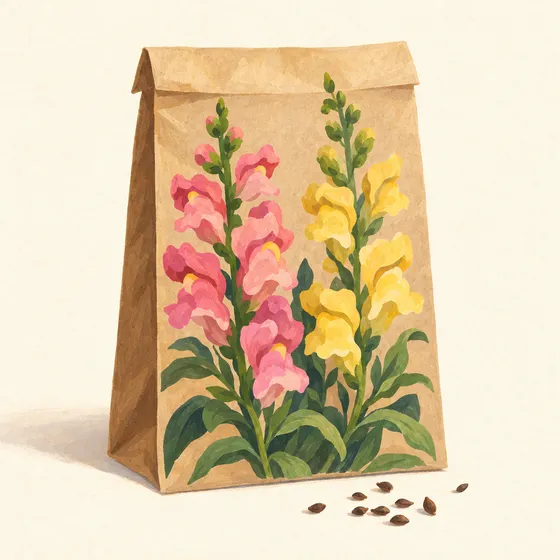 SnapdragonsSeeds
Picking notes
Cut stems when the bottom third of the flowers on a spike are open, ideally in the cool of the morning. Put them in water right away. Spikes last about a week in a vase, and the buds keep opening as you go.
Saving seed for next year
Let a few spikes dry on the plant and form pods. Collect the seeds when the pods turn brown and dry. Store them cool and dry. Seed from hybrid varieties may not come true. Our seed saving post has more tips.
From garden to table
Snapdragons are grown for flowers in beds, borders, pots and bouquets, and bumblebees love them. Safety: The ASPCA lists snapdragons as non-toxic to dogs and cats. The flowers are edible but bitter, so they are best used only as a garnish, and only ones you have grown yourself without sprays.
Questions from the potting bench
Why did my snapdragons stop blooming? Summer heat. Snapdragons are cool-season plants and often stall when days get hot. Cut them back by about a third, keep them watered, and they usually flower again as fall comes in. Do they come back? Sometimes. In zones 7 to 10 (and occasionally 11) plants can survive winter and bloom again, but they are short-lived and tend to weaken after a year or two. Many gardeners treat them as annuals and let a few self-sow. Do they need staking? Tall cutting types do, especially in windy spots. Dwarf and medium kinds stand up on their own. Can I plant snapdragons in fall? Yes, and in mild-winter areas it is the best time. Fall-planted snapdragons settle their roots over winter and flower early. Check your zone on the zones page for timing.
Grower reports
How did Snapdragons do in your garden? Members rate it and say which zone and month they planted, so everyone can see what works near them.
Recent community discussions
No one has talked about Snapdragons yet. Be the first.
Seeds to try
Affiliate links — shopping through these helps keep Evening Vines free.Essentials for Growing Snapdragons
 Grow Bags
Breathable fabric pots: grow almost anything on a patio, balcony or driveway, and roots never circle.
See it →
 Pruning Shears
Sharp bypass pruners for harvesting, deadheading and tidying.
See it →
 Seed Starting Tray
Reusable tray with a clear dome to give seeds a warm, humid start indoors.
See it →
 Garden Kneeler
A kneeling pad that flips into a seat: easier on knees and back.
See it →
 Plant Labels
Waterproof markers so you know what's coming up where.
See it →
 Organic Fertilizer
Slow-release organic plant food for vegetable beds and containers.
See it →
