
Thyme
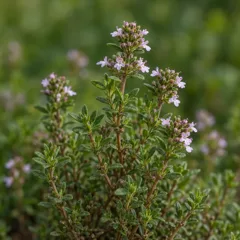
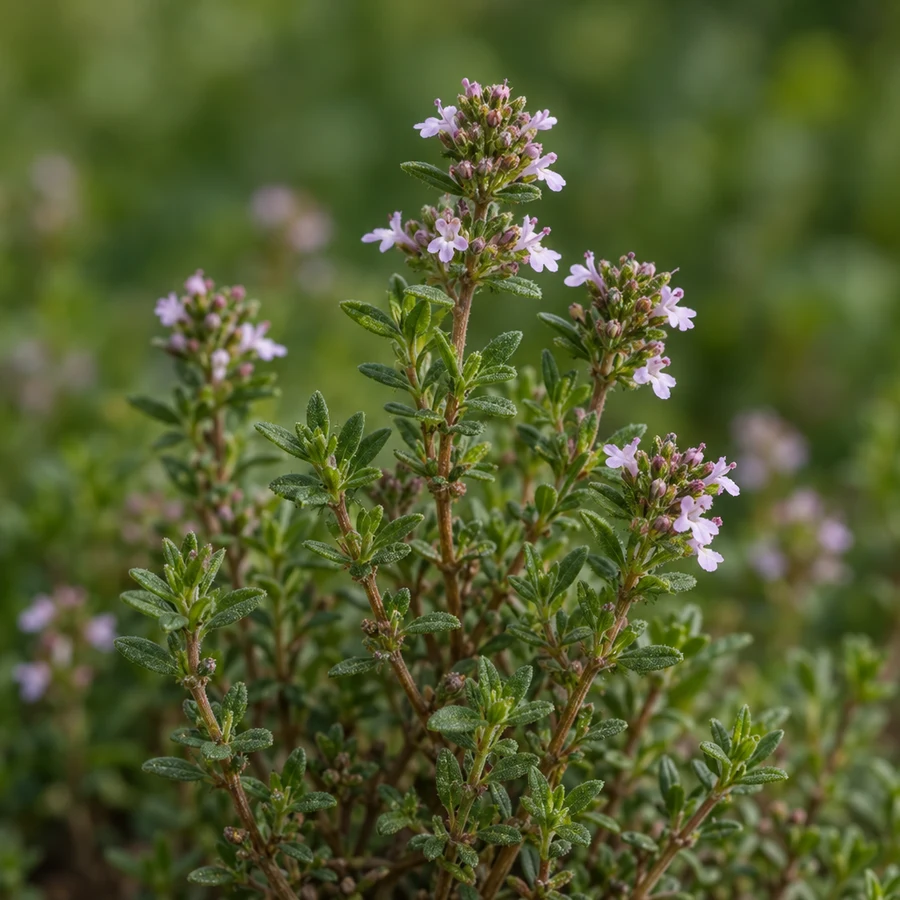
Thyme is a tough, low-growing evergreen herb with tiny aromatic leaves and small pink or lavender flowers that bees love. It forms a neat mound 6 to 12 inches tall and does best when you mostly leave it alone.
In the kitchen it earns its keep in roasts, soups, stews, and beans. In the garden it suits rock gardens, the gaps between pavers, containers, and the front edge of a bed.
Recent community discussions
No one has talked about Thyme yet. Be the first.
At a glance
| Plant type | Herb |
| Botanical name | Thymus vulgaris |
| Annual or perennial | Perennial |
| Sun | A hot, bright spot: at least half the day in direct sun |
| Water | Low; once settled in, let the soil dry out between waterings |
| Spacing | 9 to 12 inches |
| Planting depth | Surface-sown, or covered with 1/8 inch of soil at most |
| Days to germinate | 14 to 21 |
| Days to maturity | 75 to 90 from sowing |
| Best USDA zones | 5 to 9 |
| Soil pH | 6.0 to 8.0 |
Is it thyme weather where you are? See everything to plant this month or read your zone notes.

Start indoors 8–10 weeks before last frost, transplant after frost. In Zones 9–11, sow outdoors in spring or fall.

Germinates in 14–21 days; 75–90 days; perennial.

Zones 5–9, June?Oct; Sept?Dec for fall sowing; indoors year-round.

Prefers poor, dry stony or chalk soils, pH 6.0–8.0. Thrives in drought-prone ground.
Pests to watch for




Diseases

A little history
Thyme comes from the dry, rocky ground of southern Europe and has been grown since ancient times, for worship and medicine as well as for the pot. Its name may come from the Greek word thumos, meaning courage, and in the Middle Ages it was treated as a token of bravery. People also burned it to freshen rooms and drive off insects. In America, Thomas Jefferson put thyme on his list of plants for the garden in 1794.
When to sow in your zone
Spring: Start seed indoors 8 to 10 weeks before your last frost, then plant out once frost danger has passed. Use our count-back method to find your sowing date. Nursery plants and divisions can go in at the same time.
Fall: In mild zones, set out nursery plants or divisions in early fall so the roots settle before winter. Seed is best left for late winter and spring.
Your zone: Frost dates decide everything for thyme. Look up when to plant thyme in zone 5, zone 6, zone 7, zone 8, or zone 9, or see everything to sow in your zone this month.
Growing it, step by step
From the seed tray
Thyme seed is tiny and slow. Press it onto the surface of moist seed-starting mix and barely cover it, since light helps it sprout. Keep the tray at 65 to 70°F and water from below or with a mister so the seed doesn't wash away (bottom watering works well). Expect sprouts in two to three weeks, and then slow growth for a while after that.
Setting them out
Harden seedlings off for about a week, then plant them 9 to 12 inches apart in full sun and lean, well-drained soil, at the same depth they grew in the pot.
Water, cover, feed (sparingly)
Keep young plants lightly moist for their first few weeks in the ground. After that, thyme is drought tolerant: water deeply only when the soil has dried out, more often in pots and sandy soil, less in clay. Soggy soil does far more harm than a dry spell.
Skip heavy bark or straw mulch around the crown, since it holds moisture and invites rot. A thin layer of gravel or coarse sand keeps the base dry instead.
Feeding is rarely needed. Lean soil gives the strongest flavor. If growth looks weak, work a little compost in around the plant in spring.
Keeping it happy
Common thyme stays a tidy clump and doesn't run through the bed the way mint does. Creeping kinds spread slowly as their stems root along the ground, which is exactly why they fill the gaps between stepping stones so well.
Cut plants back lightly in early spring and again after flowering to keep them from getting woody, but don't cut into old bare wood, which may not sprout again. After 3 to 5 years most plants get sparse in the middle; divide them or start fresh ones. In cold zones, lay evergreen boughs over the plants once the ground freezes.
Trouble in the bed
Thyme has few serious problems when it's grown dry and in full sun. Most trouble starts with wet soil or crowded, humid growth.
- Root and crown rot: The plant wilts and browns from the base in soggy soil. Use fast-draining soil and don't overwater. See root rot.
- Gray mold (Botrytis): Fuzzy gray growth on stems and leaves in cool, damp, still weather. Space plants for airflow and cut out affected stems. See botrytis gray mold.
- Rhizoctonia web blight: Stems and leaves collapse and turn mushy, with fine, web-like threads among them. Dense plants in humid weather are most at risk. Thin crowded clumps and water at the base, in the morning.
- Alternaria leaf spot: Dark brown to black spots, often with a yellow rim. Remove spotted leaves and keep the foliage dry. See alternaria leaf spot.
- Aphids: Small clusters on soft new growth. Knock them off with a jet of water or use insecticidal soap.
- Thrips: Tiny insects that leave pale, silvery speckles on the leaves. Rinse plants and remove badly marked tips.
- Spider mites: Fine stippling and webbing in hot, dry spells. A hard spray of water on the undersides of the leaves helps.
Good neighbors



Good bed-mates: Cabbage and other cabbage-family crops, tomatoes, eggplant, strawberries, and rosemary, which likes the same dry, lean spot. The flowers bring in bees.
Keep apart: Thirsty plants such as basil and cucumbers. They want steady moisture, and watering for them will rot thyme in the same bed.
Seeds that grow well in your area in November
Affiliate links — shopping through these helps keep Evening Vines free. Purple Coneflower
 Stinging Nettle
 Smooth Blue Aster
 Polka Dot Mix
Varieties worth growing
- English thyme: The classic cooking thyme, with a strong flavor.
- French thyme: Narrow, grayish leaves and a slightly sweeter flavor.
- German Winter thyme: A very cold-hardy strain of common thyme and a good pick for zone 5.
- Lemon thyme: A bushy, mounding hybrid about 6 to 12 inches tall with a bright citrus scent, lovely with fish and chicken. Usually grown from plants or divisions. Seeds
- Creeping thyme: A low mat for walkways and rock gardens. Seeds
- Woolly thyme: A flat, gray, fuzzy carpet for between pavers. It's almost always sold as plants, since seed is hard to find.
- Silver thyme: Leaves edged in cream; pretty and edible.
Thyme seeds to buy
Affiliate links — shopping through these helps keep Evening Vines free.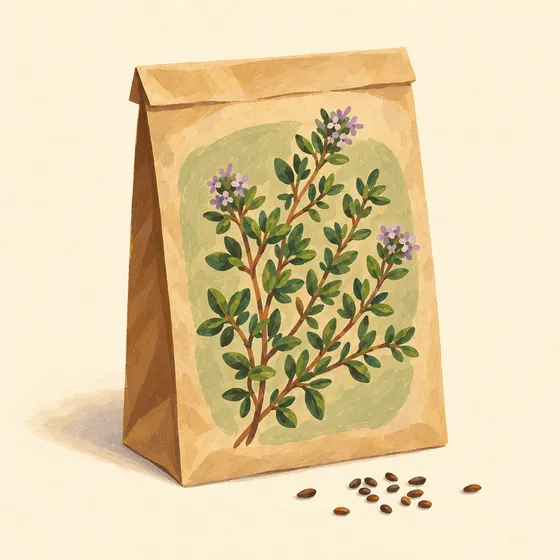 Lemon Thyme
Picking notes
Snip stems as needed once plants are about 6 inches tall, taking no more than a third of the plant at a time and leaving the woody base alone. The flavor peaks just before the plant flowers. To keep some for winter, hang small bunches in a warm, shaded, airy spot (more in drying herbs for winter).
Saving seed for next year
Let a few stems flower and dry on the plant. Cut the seed heads, shake them into a paper bag, and store the seed somewhere cool and dry for up to about 3 years (see storing leftover seeds). Named varieties and hybrids like lemon thyme may not come true from seed, so grow those from cuttings or divisions. More tips in saving seeds from your garden.
From garden to table
Ounce for ounce, fresh thyme is rich in vitamin C, vitamin A, iron, and manganese (USDA FoodData Central). A recipe only calls for a teaspoon or so, though, so think of it as flavor rather than a source of vitamins. Use it in stocks, roasts, marinades, and herb blends such as bouquet garni, or steep a few sprigs in hot water for tea.
Questions from the potting bench
Why is my thyme turning woody? That comes with age. Trim it lightly each spring and after flowering, and start new plants every few years.
Can thyme grow in a pot? Yes. Use a pot with drainage holes and gritty soil, and let it dry out between waterings. Our herb container and windowsill herb posts walk through it.
Will my thyme make it through winter? In zones 5 to 9 it usually does, and it stays green through most of the cold months. Wet soil kills more thyme than cold does, so good drainage matters most. In zone 5, cover plants with evergreen boughs once the ground freezes, or grow German Winter thyme. In zone 4 and colder, grow it in a pot and give it a cool, bright spot indoors for winter (keeping potted perennials alive has the details), or treat it as a summer herb. Check your frost dates on the zone pages.
Grower reports
How did Thyme do in your garden? Members rate it and say which zone and month they planted, so everyone can see what works near them.
Recent community discussions
No one has talked about Thyme yet. Be the first.
Seeds to try
Affiliate links — shopping through these helps keep Evening Vines free.Essentials for Growing Thyme
 Grow Bags
Breathable fabric pots: grow almost anything on a patio, balcony or driveway, and roots never circle.
See it →
 Seed Starting Tray
Reusable tray with a clear dome to give seeds a warm, humid start indoors.
See it →
 LED Grow Light
Full-spectrum light for sturdy seedlings through short winter days.
See it →
 Pruning Shears
Sharp bypass pruners for harvesting, deadheading and tidying.
See it →
 Watering Can
Long-spout can for gentle watering of seedlings and pots.
See it →
 Organic Fertilizer
Slow-release organic plant food for vegetable beds and containers.
See it →
