
Wild Bergamot
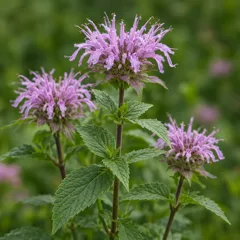
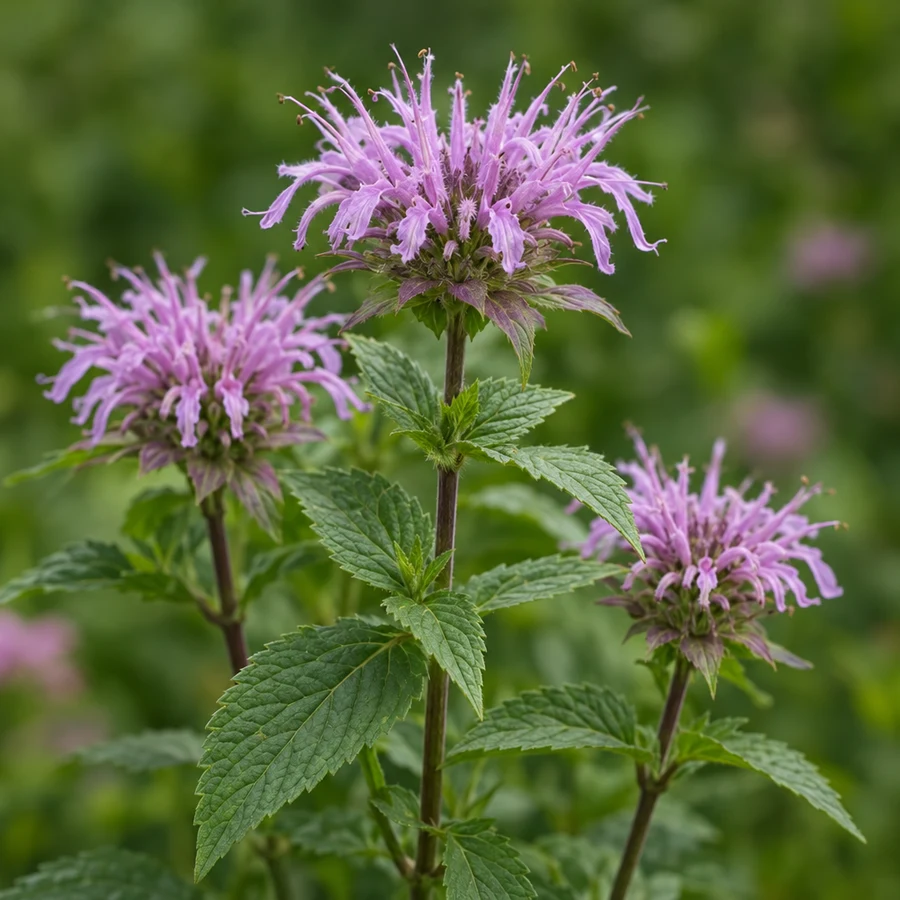
Wild bergamot is a prairie plant through and through. It grows wild in meadows, open woods and roadsides across much of North America, and in a garden it does what it does out there: it makes loose clumps of square stems topped with shaggy lavender-pink pompoms from early summer into September. Bees work it all day, and butterflies and hummingbirds stop by too.
Crush a leaf and you'll notice it smells more like oregano or thyme than anything citrusy. That's the thymol in the leaves, the same aromatic compound thyme is known for. People also call it bee balm, a name it shares with its red cousin, scarlet bee balm (Monarda didyma). They are different plants with different needs, so this page sticks to the wild, lavender one.
It asks very little. Give it sun, soil that drains, and a bit of room to wander, and it comes back stronger every year.
Recent community discussions
No one has talked about Wild Bergamot yet. Be the first.
At a glance
| Category | Herbs |
| Botanical name | Monarda fistulosa |
| Family | Lamiaceae (mint family) |
| Type | Native perennial wildflower and herb |
| Height | 2 to 4 ft |
| Spread | 2 to 3 ft, and wider over time |
| Sun | Full sun to part shade |
| Hardiness zones | 3 to 9 |
| Bloom | June to September |
| Spreads by | Rhizomes (and some self-sowing) |
| Deer | Resistant (deer and rabbits usually leave it alone) |
Is it wild bergamot weather where you are? See everything to plant this month or read your zone notes.

Direct sow in fall or early spring (cold stratification improves germination). In Zones 7+, fall sowing ensures spring growth.

Germinates in 10–20 days; matures in 80–100 days; perennial.

Zones 3–9, June?Sept; in warm zones Apr?July; indoors year-round.

Tolerates poor, dry rocky or gravel soils, pH 6.0–7.5. Drought-resistant once established.
Pests to watch for



Diseases
Mateo is researching the diseases that affect this plant.
A little history
Native peoples knew this plant long before any settler did. The USDA's plant guide for wild bergamot records the Blackfoot steeping the leaves and flowers in water, and the Teton Dakota (a Lakota people) boiling them together, as traditional remedies. Other nations used it to flavor food and drinks.
The name "Oswego tea" belongs mainly to wild bergamot's red relative, Monarda didyma, after the Oswego people of what is now New York, who shared it with settlers. You'll often read that colonists drank bee balm teas in place of imported tea after the Boston Tea Party. It's a good story, and it's repeated widely, but it rests on "reportedly" rather than records, so we keep it in the folklore drawer. What's certain is that bee balm teas, from both species, have been brewed in North American kitchens for a very long time.
When to sow in your zone
Wild bergamot seed needs no cold treatment before sowing. Prairie Moon Nursery, which grows native seed by the ton, lists it as germination Code A: no pre-treatment needed.
- Indoors: sow 6 to 8 weeks before your last frost. Our count back from last frost post shows how to find your date.
- Outdoors in spring: sow after your last frost, once the soil has warmed a little.
- Outdoors in fall: you can also scatter seed in late fall and let it sit through winter. It sprouts when spring warms up. Winter sowing in milk jugs works well too.
The seed is tiny and needs light to sprout, so press it onto the surface and don't bury it. Keep it moist but not soggy. Expect sprouts in 1 to 3 weeks at 60 to 70°F.
One thing to know before you start: plants grown from seed usually just make leaves the first year and flower in their second summer. After that, they bloom every year.
Growing it, step by step
Where: full sun gives the most flowers and the sturdiest stems. Part shade is fine, but expect a little more flopping and a little more mildew.
Soil: this is a plant for ordinary to lean soil. It grows naturally in dry to medium prairie soils, including poor and rocky ones, and it isn't fussy about pH. Good drainage matters far more than richness. Heavy, wet ground that stays soggy in winter is the one thing it dislikes.
Planting out: harden seedlings off (see hardening off seedlings) and set them out after your last frost, about 18 to 24 inches apart. That looks generous at first, but they fill in.
Watering: water new plants regularly through their first summer. Once settled, wild bergamot handles dry spells well and only needs a drink in long droughts.
Feeding: none needed. Lean soil suits it. Extra fertilizer, especially nitrogen, makes soft, floppy growth that mildew loves.
Living with a spreader
Wild bergamot is native, so it isn't invasive in the usual sense, but it does wander. Shallow rhizomes push the clump outward a little each year, and the middle can thin out and go bare. If you want it to stay put, grow it in a big pot or give it a spot where it can roam, like a meadow corner or a pollinator border.
Keeping it happy
- Dividing: lift and divide clumps every 3 or 4 years, or whenever the center looks hollow. Replant the lively outer pieces and compost the old woody middle. Spring or early fall both work; our dividing perennials in fall post walks you through it.
- Deadheading: snipping faded flower heads can coax out a few more blooms (more in deadhead flowers for more blooms). Leave the last flush to set seed if you want to save some.
- Airflow: thin a few stems from crowded clumps in early summer. It's the simplest way to keep mildew down.
- Winter: no mulch or covering needed. It's hardy right down to zone 3. Leave the stems standing over winter if you like the look, then cut them back in spring (see spring cleanup).
Trouble in the bed
Pests: wild bergamot is rarely bothered much. Aphids, thrips and spider mites can turn up, especially in hot, dry weather. A hard spray of water usually knocks aphids and mites back; insecticidal soap is there if they get out of hand.
Diseases:
- Powdery mildew: the big one. A white, dusty coating spreads over leaves from mid to late summer. Wild bergamot is actually more prone to it than scarlet bee balm, according to Purdue Extension. It looks bad but rarely kills the plant. Good spacing, full sun, no extra fertilizer and watering the soil rather than the leaves all help. Cut badly affected stems down after flowering and throw them away rather than composting them. Our powdery mildew in late summer post has more.
- Rust: look for yellow spots on top of the leaves and raised orange pustules underneath (University of Minnesota Extension). Remove affected leaves and keep foliage as dry as you can.
- Leaf spot: brown or dark spots on the leaves, mostly in wet summers. Pick off spotted leaves and clear up fallen ones in fall (see clean up diseased plants in fall).
Good neighbors







Wild bergamot's best neighbors are other prairie plants that like the same sun and the same lean, well-drained soil, so nobody gets overwatered or overfed:
- Black-Eyed Susan
- Milkweed (butterfly milkweed especially)
- Coreopsis
- Aster
- Short prairie grasses, such as prairie dropseed
Together they give pollinators flowers from early summer into fall.
Seeds that grow well in your area in November
Affiliate links — shopping through these helps keep Evening Vines free. Purple Coneflower
 Stinging Nettle
 Smooth Blue Aster
 Polka Dot Mix
Varieties worth growing
'Claire Grace' is the one true wild bergamot selection we recommend. It's Monarda fistulosa with lavender flowers, and it came out near the top of Mt. Cuba Center's three-year Monarda trial, rated "good" for powdery mildew resistance and better behaved than the plain species. It grew about 38 inches wide in three years there, so give it room.
The plain, unnamed species from native seed is also a fine choice, especially for meadows.
Which Monarda is which?
Many "bee balm" varieties you'll see in catalogs aren't wild bergamot at all. Here's how to tell the relatives apart:
- Scarlet bee balm (Monarda didyma): red flowers, hummingbird favorite, likes richer and moister soil than wild bergamot. This is the original "Oswego tea." Popular cultivars such as 'Jacob Cline', 'Marshall's Delight', 'Panorama' and 'Blue Stocking' ('Blaustrumpf') are M. didyma or hybrids, not wild bergamot.
- Lemon bergamot (Monarda citriodora): lemon-scented leaves, but it's an annual or biennial, not a long-lived perennial. Sow it fresh each year.
- Wild bergamot (Monarda fistulosa): lavender-pink flowers, oregano-scented leaves, the toughest and most drought-tolerant of the three. Seeds
Wild Bergamot seeds to buy
Affiliate links — shopping through these helps keep Evening Vines free.Picking notes
Flowers open from June into September. You can pick leaves any time the plant is growing well, but they're most fragrant just before and while it flowers. Snip stems in the morning once the dew has dried, and never take more than about a third of a clump at once.
To keep some for winter, hang small bunches upside down somewhere airy and out of the sun, then strip the dry leaves into a jar. Our dry herbs for winter post has the details.
Saving seed for next year
- Let a few flower heads fade and turn brown on the plant in late summer or fall.
- Snip the dry heads into a paper bag and shake or tap them. The seeds are tiny and dark.
- If you grow scarlet bee balm or other Monarda nearby, they can cross, so saved seed may not come true.
- Store the seed in a labeled envelope somewhere cool, dry and dark. See saving seeds from your garden and store leftover seeds.
From garden to table
The leaves and flowers are edible (NC State Extension lists them for tea). The flavor is strong and herby, somewhere between oregano and thyme, so a little goes a long way:
- Tea: steep a few fresh or dried leaves and flowers in hot water for a fragrant cup, the way North American households have for generations. Honey softens the sharp edge.
- Kitchen herb: chop a few leaves into bean dishes, roast vegetables or a rub for meat, anywhere you'd use oregano.
- Garden use: a top pollinator plant for bees, butterflies and hummingbirds, and a long-lasting cut flower.
We share these as kitchen and garden traditions, not as health advice.
Questions from the potting bench
Is wild bergamot the same as bee balm? Partly. "Bee balm" is a common name for several Monarda species. Wild bergamot is Monarda fistulosa (lavender flowers, dry soils). Scarlet bee balm is Monarda didyma (red flowers, moist soils).
When should I plant wild bergamot? Start seed indoors 6 to 8 weeks before your last frost, sow outdoors after frost, or scatter seed in late fall to sprout in spring. Set out nursery plants in spring or early fall.
Will it flower the first year from seed? Usually not. Expect leaves the first year and flowers from the second summer on.
Is wild bergamot invasive? It's native across much of North America, so it isn't classed as invasive, but it spreads by rhizomes and can wander. Divide it every few years or grow it in a pot to keep it in bounds.
Which zones can grow it? Zones 3 to 9. Find your zone's notes here: zone 3, zone 4, zone 5, zone 6, zone 7, zone 8, zone 9.
Do deer eat it? Rarely. The strong-smelling leaves put off deer and rabbits.
Grower reports
How did Wild Bergamot do in your garden? Members rate it and say which zone and month they planted, so everyone can see what works near them.
Recent community discussions
No one has talked about Wild Bergamot yet. Be the first.
Seeds to try
Affiliate links — shopping through these helps keep Evening Vines free.Essentials for Growing Wild Bergamot
 Grow Bags
Breathable fabric pots: grow almost anything on a patio, balcony or driveway, and roots never circle.
See it →
 Seed Starting Tray
Reusable tray with a clear dome to give seeds a warm, humid start indoors.
See it →
 LED Grow Light
Full-spectrum light for sturdy seedlings through short winter days.
See it →
 Pruning Shears
Sharp bypass pruners for harvesting, deadheading and tidying.
See it →
 Watering Can
Long-spout can for gentle watering of seedlings and pots.
See it →
 Organic Fertilizer
Slow-release organic plant food for vegetable beds and containers.
See it →
