
Winter Squash
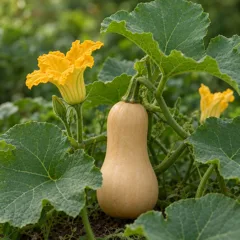
Winter squash is a warm-season vine grown for hard-skinned fruit that keeps for months. It includes butternut, acorn, delicata, and many more. The fruit is picked fully ripe, when the rind is tough, which is why it stores so well.
Most vines run 8 to 15 feet, so give them room or train them up a sturdy trellis. Bush types suit small beds. One or two plants can feed a family through winter.
Recent community discussions
No one has talked about Winter Squash yet. Be the first.
At a glance
| Plant type | Vegetable (vining squash) |
| Botanical name | Cucurbita maxima, C. moschata, and C. pepo |
| Annual or perennial | Annual |
| Sun | Full sun |
| Soil | Rich, well-drained loam with plenty of compost |
| Water | 1 to 2 inches per week |
| Spacing | 3 to 6 feet (bush types 2 to 3 feet) |
| Planting depth | 1 inch |
| Soil temperature to sow | At least 65°F, 70°F is better |
| Days to germinate | 5 to 10 days |
| Days to maturity | 80 to 110 days |
| Best USDA zones | A summer annual anywhere with 80 to 110 frost-free warm days |
| Soil pH | 6.0 to 6.8 |
From planting to harvest
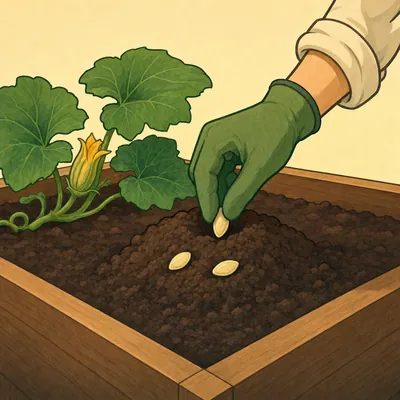
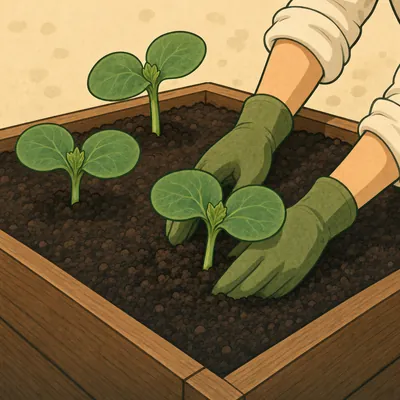
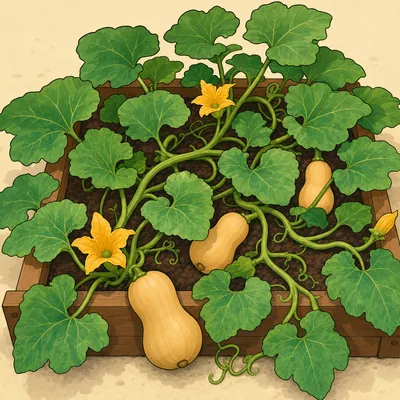
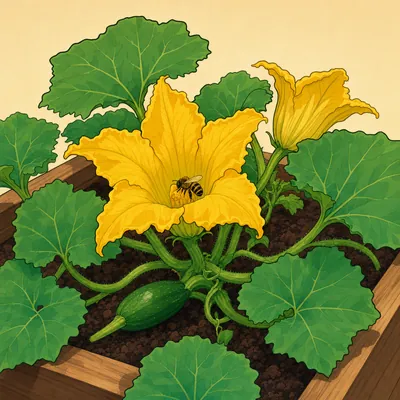
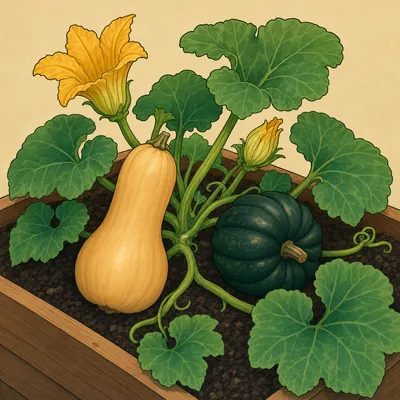
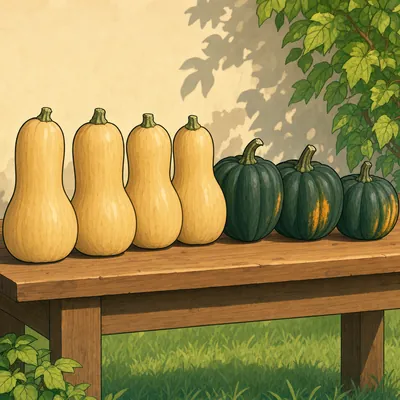
Is it winter squash weather where you are? See everything to plant this month or read your zone notes.

Direct sow 2 weeks after last frost when soil is 65°F+ (18°C). In Zones 8–10, sow again midsummer for fall harvest.

80–120 days.

Zones 3–11, Sept?Oct; ready when skin hardens and color deepens.

Fertile clay loam or sandy loam, pH 6.0–6.8. Needs compost and steady moisture. Avoid heavy clay.
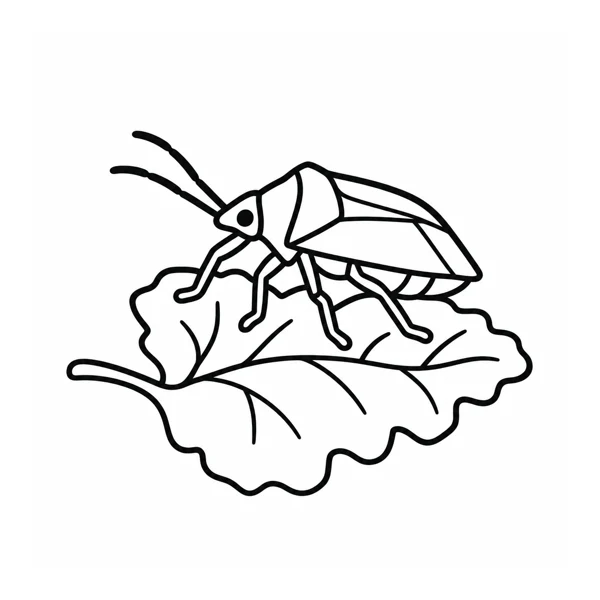
Pests to watch for




A little history
Squash was first grown in the Americas, where people were tending it 8,000 to 10,000 years ago. It was one of the Three Sisters crops, planted with corn and beans. Explorers carried it around the world, and it became a staple in many kitchens.
When to sow in your zone
Spring: Sow outdoors 1 to 2 weeks after your last frost, once the soil is at least 65°F (70°F is better). Then count back 80 to 110 days from your first fall frost to be sure the fruit has time to ripen. The count back from last frost post shows how.
Summer: In zones 9 to 11, sow a second time in mid to late summer for squash that ripens from October to December. In colder zones, sow in spring only, since the plants need one long warm stretch.
When to plant winter squash in your zone:
- Zone 3 and zone 4: late May to early June. Pick quick varieties (under 90 days) or start seeds indoors 3 to 4 weeks ahead.
- Zone 5: late May.
- Zone 6: early to mid May.
- Zone 7: late April to early May.
- Zone 8: mid to late April.
- Zone 9: late March to April, and again in July.
- Zone 10 and zone 11: late winter to spring, and again in late summer. Only the frost-free gardens of 10b to 13 can sow in late fall or winter.
Not sure of your zone or frost dates? Start at the zones page. In late fall and winter, most of us aren't sowing squash at all: the work then is curing and keeping the harvest (see check stored harvests in winter).
Growing it, step by step
In the hill
Work a few shovels of compost into each spot, then rake the soil into a low mound about a foot across. A raised hill drains faster and warms sooner in spring, and squash seed rots in cold, wet ground. Sow 2 or 3 seeds per hill, 1 inch deep, and thin to the strongest plant. Leave 3 to 6 feet between hills so air moves through the leaves once they fill in.
A head start for short seasons
If your summer is short, start seeds indoors 3 to 4 weeks before planting out, in pots that go straight into the ground. The roots sulk if they're disturbed, so handle them gently, and harden off the seedlings first. The plant out squash and cucumbers post walks through the move outside.
Once the vines run
Side-dress with a balanced fertilizer when the vines start to reach out. Go easy on nitrogen: too much gives you a sea of leaves and few fruit. Lay 2 to 3 inches of straw under the vines to hold moisture, smother weeds, and keep fruit off bare soil.
Water at the roots
Give 1 to 2 inches a week, soaking the soil at the base of the plant rather than sprinkling over the top. Dry leaves are much less likely to pick up mildew. Ease off as the fruit colors up, for better flavor and keeping.
Keeping it happy
If small fruit keep falling off, hand-pollinate with a small brush in the morning. Pinch vine tips once 3 to 5 fruits have formed to send energy to the fruit. Set fruit on straw or boards to prevent rot. Grow squash in a new spot each year (crop rotation helps keep diseases down).
Trouble in the bed
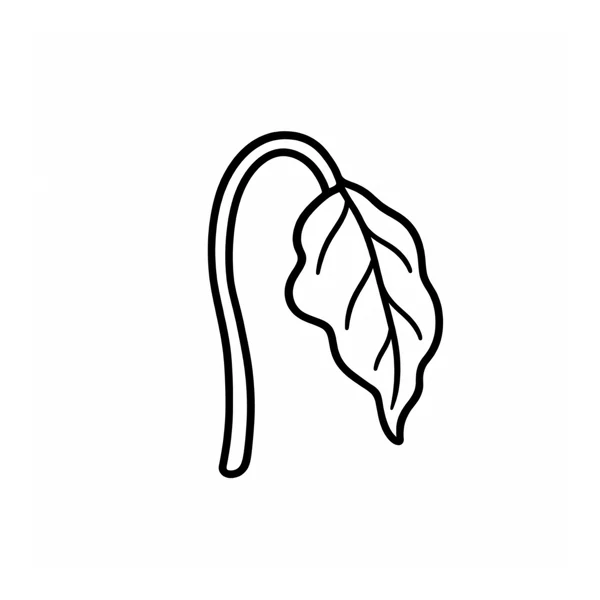
- Squash bugs: Suck sap and wilt leaves. Hand-pick bugs and eggs, and use row cover until flowering.
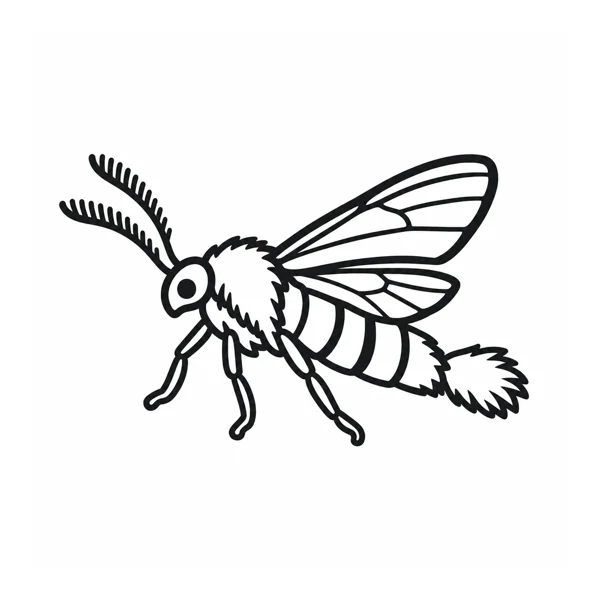
- Squash vine borers: Larvae tunnel into stems and wilt vines. Slit the stem to remove them, then mound soil over it. Butternut and other C. moschata types are less favored by the moth, so they're a good pick where borers are bad. Hubbards are a favorite.
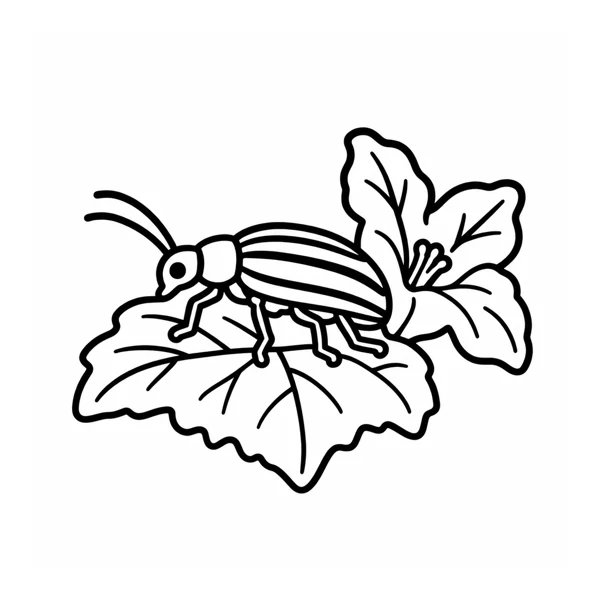
- Cucumber beetles: Chew leaves and spread bacterial wilt. Use row cover until flowering and clear debris.
- Powdery mildew: White powder on leaves. Space plants, water at the base, and choose resistant varieties. More in powdery mildew in late summer and on the powdery mildew page.
Good neighbors



Good: Corn, beans, nasturtiums, and marigolds.
Squash vines run a long way and will shade out any low crop planted beside the hills, so give them their own patch or the edge of the bed.
Seeds that grow well in your area in November
Affiliate links — shopping through these helps keep Evening Vines free. Johnny Jump Up
 Organic Cat Grass
 Arugula Microgreens
 Organic Alfalfa
Varieties worth growing
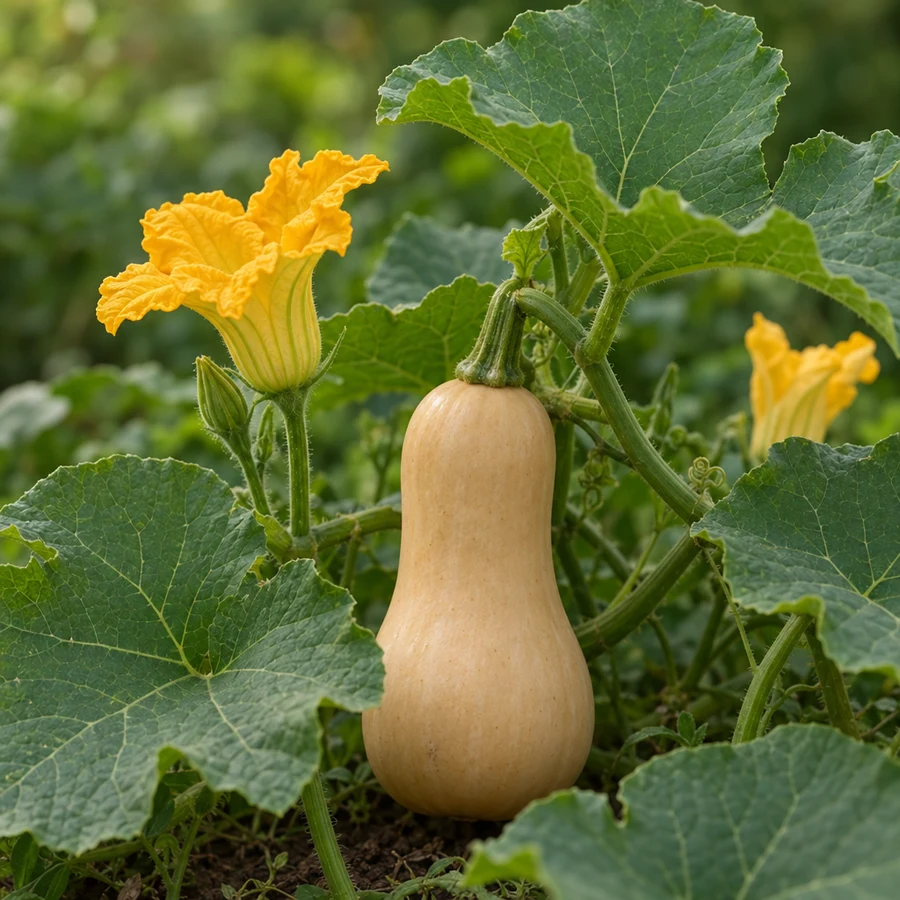
- Waltham Butternut: Tan, bottle-shaped fruit with sweet orange flesh. Seeds
- Table Queen: Dark green acorn squash with a ribbed shape. Seeds
- Delicata: Cream and green striped, with thin edible skin. Seeds
- Sweet Dumpling: Small, striped squash with sweet flesh.
- Red Kuri: Orange teardrop-shaped fruit with nutty flavor.
- Blue Hubbard: Very large, blue-gray fruit that stores a long time. Seeds
Winter Squash seeds to buy
Affiliate links — shopping through these helps keep Evening Vines free.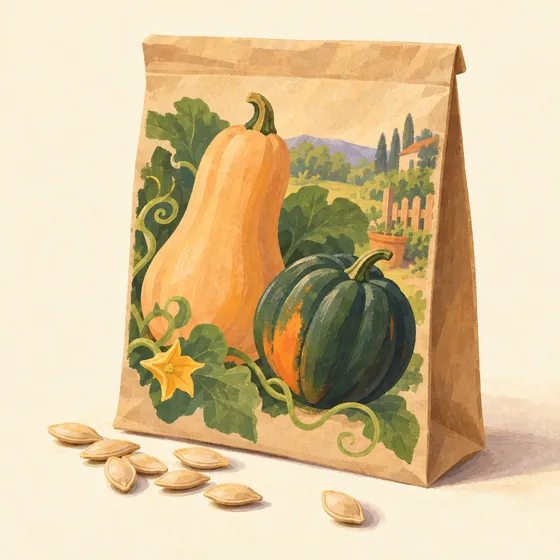 Delicata
Picking notes
Spring sowings ripen in September and October. Summer sowings in zones 9 to 11 ripen from October to December. Pick when the rind is hard and a thumbnail does not dent it, and the stem is dry. Cut with 2 to 3 inches of stem, and never carry fruit by the stem. Harvest before a hard frost.
Curing depends on the type. Butternut, Hubbard, and other long keepers improve with curing: keep them somewhere warm and dry at 80 to 85°F for about 10 days. Acorn, delicata, sweet dumpling, spaghetti, and Red Kuri don't need it, and warm curing can actually shorten how long acorn types keep, so take those straight to storage. Store all of them at 50 to 55°F. Below 50°F the fruit can suffer chilling damage. See harvest winter squash and pumpkins and store squash and potatoes for winter.
Saving seed for next year
Squash cross easily within a species, so separate varieties of the same species by about a half mile, or hand-pollinate and bag the flowers. Butternut is Cucurbita moschata. Acorn and delicata are Cucurbita pepo. Kuri and Hubbard are Cucurbita maxima. Let fruit ripen fully, scoop out seeds, rinse, dry for a week, and store cool and dry. More in saving seeds from your garden.
From garden to table
Winter squash gives vitamin A, vitamin C, and fiber. Roast, steam, mash, or add to soups, stews, and pies. Seeds can be roasted.
Safety note: Do not eat squash that tastes very bitter. Bitterness can mean high levels of cucurbitacins, which can make you sick. Spit it out and discard the fruit.
Questions from the potting bench
How do I know when it's ripe? The rind is hard, the stem is dry, and the skin has deep color.
Why are my small fruits falling off? Usually poor pollination. Hand-pollinate in the morning.
How long will it store? Hubbard keeps up to 6 months. Butternut keeps 2 to 6 months (2 to 3 is usual; the longer end needs ideal storage). Kuri keeps about 3 months. Acorn and delicata keep 1 to 3 months, so eat those first.
Grower reports
How did Winter Squash do in your garden? Members rate it and say which zone and month they planted, so everyone can see what works near them.
Recent community discussions
No one has talked about Winter Squash yet. Be the first.
Seeds to try
Affiliate links — shopping through these helps keep Evening Vines free.Essentials for Growing Winter Squash
 Grow Bags
Breathable fabric pots: grow almost anything on a patio, balcony or driveway, and roots never circle.
See it →
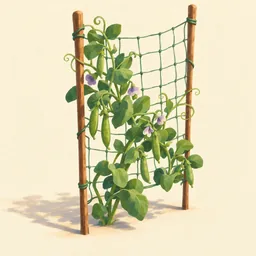 Trellis Netting
Strong netting for peas, beans, cucumbers and melons to climb: more crop in less space.
See it →
 Soaker Hose
Waters the roots slowly, not the leaves: less disease, less water, less work.
See it →
 Organic Fertilizer
Slow-release organic plant food for vegetable beds and containers.
See it →
 Seed Starting Tray
Reusable tray with a clear dome to give seeds a warm, humid start indoors.
See it →
 Garden Hand Tools
Trowel, transplanter and cultivator: the three tools you reach for most.
See it →
