Some of this summer's trouble is still out in the beds. Spotted tomato leaves, a mushy cabbage stump, the potato you missed at harvest: each one can carry a disease through the cold months and hand it to next year's plants. Not every disease works that way, though, so it pays to know which ones are waiting and where they're hiding before you start pulling things up.
The best time for this job is after your first hard frost, when the summer crops are finished anyway. Not sure when that usually lands? Look up your frost dates and this month's planting list on the zones page.
Frost-free gardens: you're planting, not clearing
If you garden in zones 10b to 13, fall is the start of your main growing season, not the end of it. Pull out anything that was sick as you go, but put most of your energy into sowing and planting. Your zone hubs have the details: zone 10 and zone 11. The rest of this page is written for gardens that freeze.
Where each disease waits for spring
| Disease | Where it spends the winter | What to do now |
|---|---|---|
| Early blight (tomatoes, potatoes) | Dead leaves and stems left on the ground | Bag the whole plant and the fallen leaves |
| Late blight (potatoes, tomatoes) | Living potato tubers left in the soil or tossed on a pile | Dig every tuber; pull volunteer potatoes in spring |
| Brassica black rot (cabbage family) | Old stems, roots and leaves, until they rot away | Bag stumps and roots as well as leaves |
| Botrytis gray mold (many plants) | Small hard black bodies in rotting plant bits | Clear soft, moldy material so it can't sit wet |
| Clubroot (cabbage family) | Spores in the soil, for many years | Keep cabbage relatives out of that bed for years; lime |
| Fusarium wilt (tomatoes and others) | In the soil, for years | Long rotation and resistant varieties |
| Downy mildew and powdery mildew (squash, cucumbers, melons) | Mostly not in your garden: spores ride north on the wind each summer | Tidy up, but don't count on cleanup to stop them |
What goes in the bag
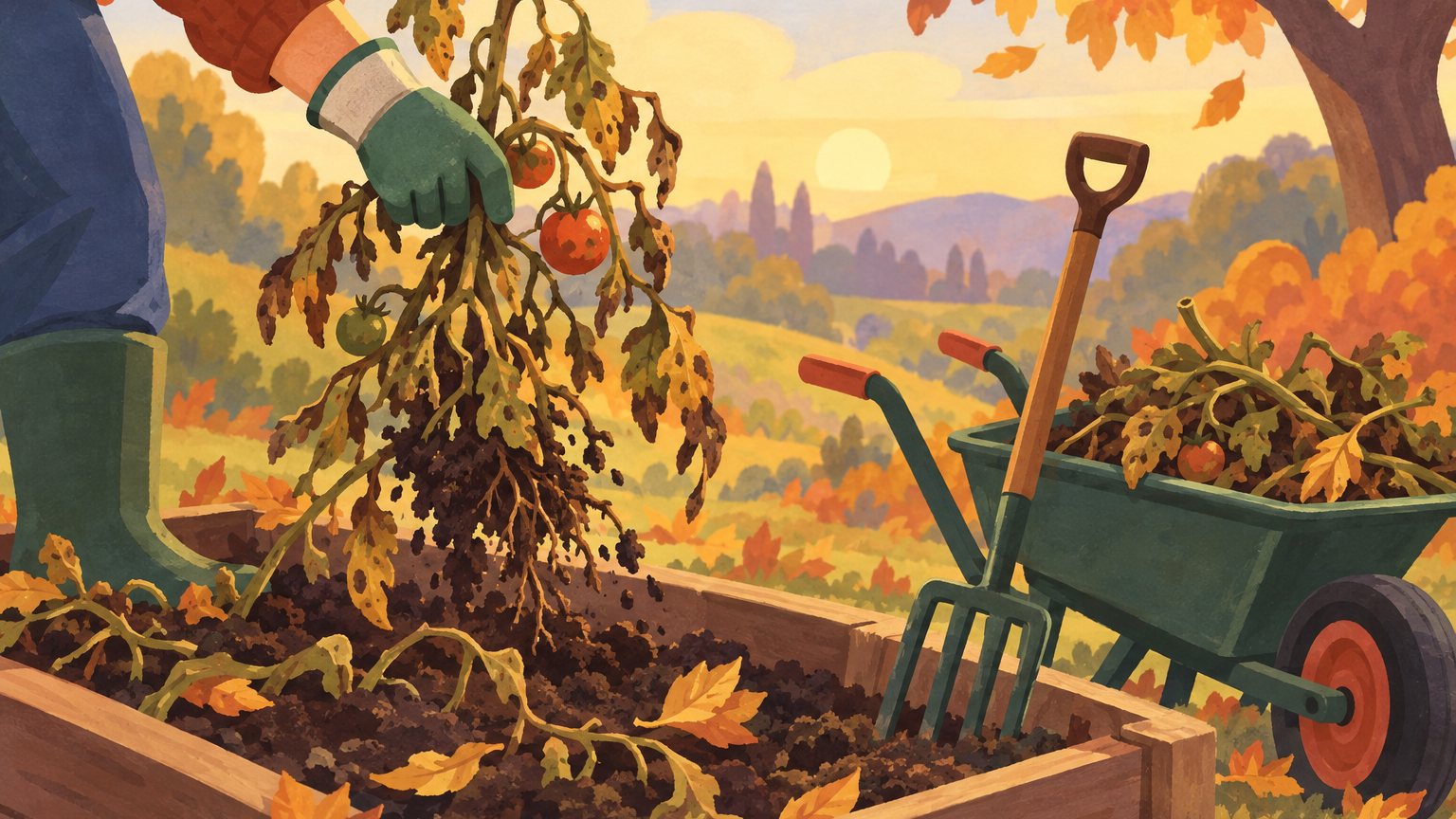
Anything with early blight, black rot or gray mold goes in a bag for the trash, or out with your town's yard waste if it accepts sick plants. Pull the whole plant, roots and all, and rake up the fallen leaves and any fruit that dropped and rotted on the soil.
Why not the compost heap? A backyard heap rarely runs hot enough, for long enough, to finish off disease spores. It takes a pile holding around 150°F or more for days, turned so every part spends time in the hot middle, and most of ours never get there. Sick plants are safer gone.
Potatoes: dig every last one
Late blight is the one people get wrong most often. It doesn't spend winter in dead vines, old stakes or bare soil. It needs living tissue, and in cold-winter gardens that means potato tubers: the small ones you missed at harvest, the ones that sprout up again as volunteers, and spuds thrown on a pile to rot.
So go back over the potato patch with a fork and dig out every tuber you can find, even the marble-sized ones. Don't leave a heap of culls at the edge of the garden. Next spring, pull any potato that comes up where you didn't plant it, and start with certified seed potatoes (our post on planting seed potatoes explains why). Blighted tomato vines are worth clearing too, but the stray potatoes are what really carry this disease over.
The mildews that ride in on the wind
Downy mildew on squash and cucumbers can't survive a winter with hard frost. It starts each year in warm southern areas and blows north as the season goes on. Powdery mildew on squash family crops mostly arrives the same way in northern gardens. Clearing the old vines is still tidy and does no harm, but it won't do much to stop either one next summer. Resistant varieties and good air flow do more. Our post on powdery mildew in late summer has more on living with it.
Soil that holds a grudge
Clubroot and fusarium wilt don't need old plants at all. They live in the soil itself for years: clubroot can last close to 20 years, fusarium wilt up to about 10. Moving a crop one bed over for a single season isn't enough.
- Clubroot: keep cabbage, broccoli, kale, turnips, radishes and their relatives out of that bed for several years, and pull mustard-family weeds that turn up there. Test the soil and, if it's acid, lime it to around pH 7.2, which makes life hard for the disease. Our post on testing your soil walks through getting a soil test.
- Fusarium wilt: keep the affected crop and its close relatives out of that spot for three to five years, and grow resistant varieties when they come back.
Sketch this year's bed map
Before the beds go bare and you forget, draw a quick map of what grew where and mark the beds that had trouble. Tuck it into your garden journal. Come spring it tells you where the tomatoes, potatoes and cabbage family can't go, and our crop rotation plan shows how to turn it into next year's layout. A fall cover crop is a good way to keep a resting bed covered while it waits.
What stays standing
Healthy plants are a different story. Perennial stems, seed heads and leaves from healthy trees can stay where they are: they shelter beneficial insects over winter and feed the soil as they break down. Only the sick material needs to go. Our post on putting the garden to bed covers what to keep, and fall leaf mulch shows how to use the healthy leaves.
Pruners and stakes
A quick wipe isn't enough for tools that touched sick plants. First scrub off all the soil and plant gunk with a stiff brush and water, because disinfectant can't reach through dirt. Then do one of these:
- Pruners and small tools: wipe or dip the blades in 70% rubbing alcohol and let them air dry.
- Stakes, cages and larger tools: soak them for 20 to 30 minutes in 1 part household bleach to 9 parts water, then rinse well and dry. Bleach rusts metal if you leave it on.
Cleaning and storing garden tools covers oiling and storing everything afterward.
Quick answers
Can you compost blighted tomato plants?
Not in a home heap. Early blight lives on in dead leaves and stems, and a backyard pile won't run hot enough to kill it. Late blight is mainly carried by potatoes rather than dead tomato vines, but if you're not sure which blight you had, bag the plants.
What should I do with diseased tomato plants in fall?
Pull the whole plant, roots included, rake up the fallen leaves and fruit, and bag it all for the trash or yard waste. Scrub and disinfect the stakes and cages, and plan to grow tomatoes somewhere else next year.
Do I need to clear the garden if nothing got sick?
No. Healthy stems and leaves can stay. This job is only about the plants that had disease.
Is it too late if the plants are already frozen and brown?
Not at all. As long as you can get into the beds, pull and bag them. Earlier is better, but any time before spring helps.
Next steps
- Find your frost dates and planting list on the zones page.
- Plan where everything goes next year with the crop rotation plan.
- Read up on each disease: early blight, late blight, black rot, gray mold, clubroot and fusarium wilt.