
Melons
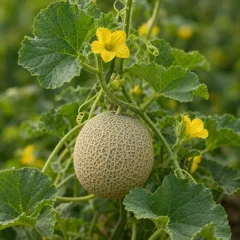
Melons are sun-and-heat plants. Give them warm soil, room to ramble and steady water while the fruit swells, and you get the best-tasting thing in the summer garden. Rush them into cold ground and they sulk for weeks.
They belong to the squash family, alongside cucumbers, squash and pumpkins, and they grow the same way: long vines, big leaves, yellow flowers that need bees, and fruit that ripens in high summer.
In November, melons belong on the seed list rather than in the ground, unless you garden in zone 10 or 11. If you're making that list now, see order seeds early and make a seed list.
Muskmelon, watermelon or honeydew?
Three kinds turn up in most gardens, and they don't behave quite the same way:
- Muskmelon (what most Americans call cantaloupe) has a netted rind and orange flesh. It tells you when it's ripe by slipping off the vine on its own.
- Honeydew has a smooth, creamy rind and pale green flesh. It's the same species as muskmelon but never slips, so you cut it.
- Watermelon is a different plant altogether (see the History section below). It needs the most heat and the longest season, and you judge it by its tendril and ground spot. It has its own page: Watermelon.
Recent community discussions
No one has talked about Melons yet. Be the first.
At a glance
| Category | Vegetables |
| Type | Warm-season annual vine (frost kills it) |
| Sun | Full sun, 6-8 hours or more |
| Soil temperature to plant | 65-70°F (18-21°C) |
| Soil pH | About 6.0-6.8 |
| Spacing | 18-24 in between plants, rows or vine paths 5-6 ft apart |
| Start indoors | 3-4 weeks before planting out, in individual pots |
| Days to harvest | About 65-100, depending on type |
From planting to harvest
Is it melons weather where you are? See everything to plant this month or read your zone notes.

Direct sow 2 weeks after last frost when soil is 70°F+ (21°C). In Zones 9–11, sow midsummer for a fall harvest.

70–100 days.

Zones 4–11, late summer?early fall; peak in Zones 6–9 mid to late summer.

Prefer sandy or gravelly soils, pH 6.0–6.8. Warm, quick-draining soils are essential.
Pests to watch for



Diseases
Mateo is researching the diseases that affect this plant.
A little history
Watermelon and muskmelon look like cousins, but they're only distantly related and come from different places.
Watermelon was domesticated in northeast Africa. A 2021 genetic study found its closest wild relative is the Kordofan melon of Sudan, a whitish, non-bitter fruit that can be eaten raw. Tomb paintings from the Nile Valley show a watermelon-like fruit more than 4,000 years ago, which fits that story.
Muskmelons and honeydews (Cucumis melo) have a murkier past. Botanists have argued for Asian roots and for African ones, and the truth may be a bit of both. What is clear is that they were grown in Egypt and southwest Asia in ancient times and later spread into Europe. The name "cantaloupe" comes from Cantalupo, a papal estate near Rome where these melons were grown in the 1500s. By then Europeans had also carried melon seed to the Americas.
When to sow in your zone
Melons hate cold soil. Wait until the top couple of inches of soil reach 65-70°F (18-21°C), which is usually a week or two after your last frost. Seed sown into colder ground tends to rot or sit there doing nothing. A soil thermometer is the easiest way to know; count back from your last frost to plan the weeks.
What matters more than your hardiness zone is how many warm, frost-free days you get. If your summers are short or cool, choose short-season varieties (about 65-80 days to harvest) and start with transplants. Watermelons and honeydews need the most heat; muskmelons are a little more forgiving.
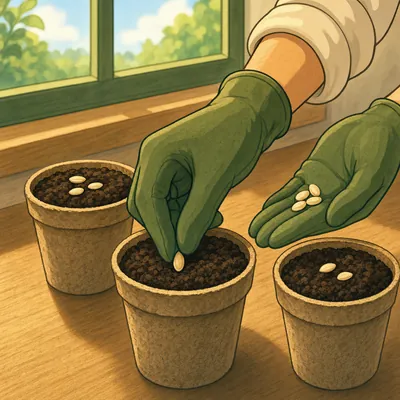
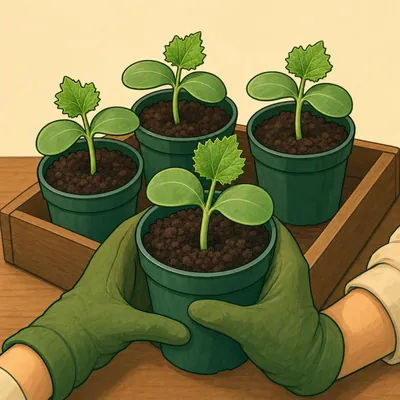
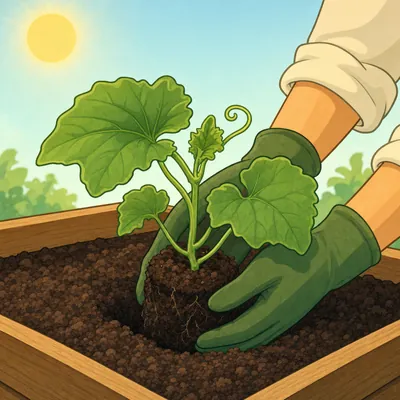
If you start seed indoors, sow 3-4 weeks before planting out, one or two seeds per individual pot. Melons don't like their roots disturbed, so older, rootbound seedlings rarely do well. Plant out when they have 2 or 3 true leaves, after hardening them off.
When to sow melons in your zone
This is a rough guide built from the average frost dates on our zone pages. Your own zone page and ZIP list give the closer timing.
| Zone | Start indoors | Sow or plant out | Notes | |---|---|---|---| | Zone 3 | Late May | Mid to late June | Short-season types only; black plastic and row cover help | | Zone 4 | Mid May | Early to mid June | Short-season types; transplants beat direct sowing | | Zone 5 | Early May | Late May to mid June | Pick varieties under about 90 days | | Zone 6 | Late April | Mid to late May | Most muskmelons fine; small watermelons safest | | Zone 7 | Early to mid April | Early to late May | Long enough for most types | | Zone 8 | Late March | Late April to May | Early June sowings still ripen before fall | | Zone 9 | Not needed | March to May | In hot areas a July sowing can ripen in fall | | Zone 10 | Not needed | February to June | Desert gardens: February to March, then late July to August | | Zone 11 | Not needed | Most of the year | Best in the drier months; very wet spells bring disease |
Not sure of your zone? Start at our zones page.
Growing it, step by step
Sun and soil. Melons want full sun: at least 6-8 hours, and more is better. They do best in loose, well-drained soil, sandy loam if you have it, with plenty of compost worked in. Aim for a pH of about 6.0-6.8. Below 6.0 the leaves can yellow and the plants set little fruit, so if your soil runs acid, test it before spring.
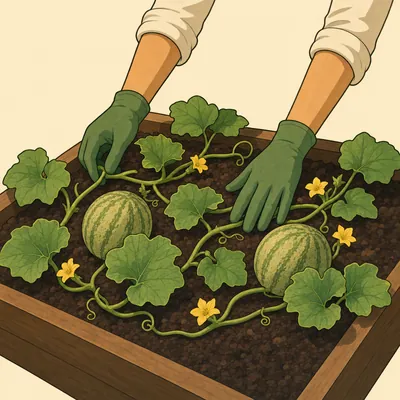
Hills or raised rows. Planting on low mounds or a raised bed (6-8 inches is plenty) helps because raised soil warms up and drains faster in spring than flat ground. That's the whole trick: warm, well-drained roots.
Warming the soil early. Black plastic laid over the bed a week or two before planting heats the soil and can let you plant 2-3 weeks sooner. Cut the planting holes on the day you plant. A light row cover keeps young plants warm and keeps beetles off, but take it off when the flowers open so the bees can get in, or sooner if the weather turns hot.
Giving the vines room. Space plants 18-24 inches apart, with 5-6 feet between rows or vine paths. If you sow direct, put 2 or 3 seeds at each spot, about an inch deep, and thin to the strongest seedling. Small-fruited types can climb a sturdy trellis, which saves a lot of ground (see staking and supporting plants).
Feeding. Compost at planting does most of the work. When the vines start to run, a light side-dressing helps. Go easy on nitrogen after that, or you get a jungle of leaves and few melons. Potassium matters for flavor. More on this in feeding vegetables mid-season.
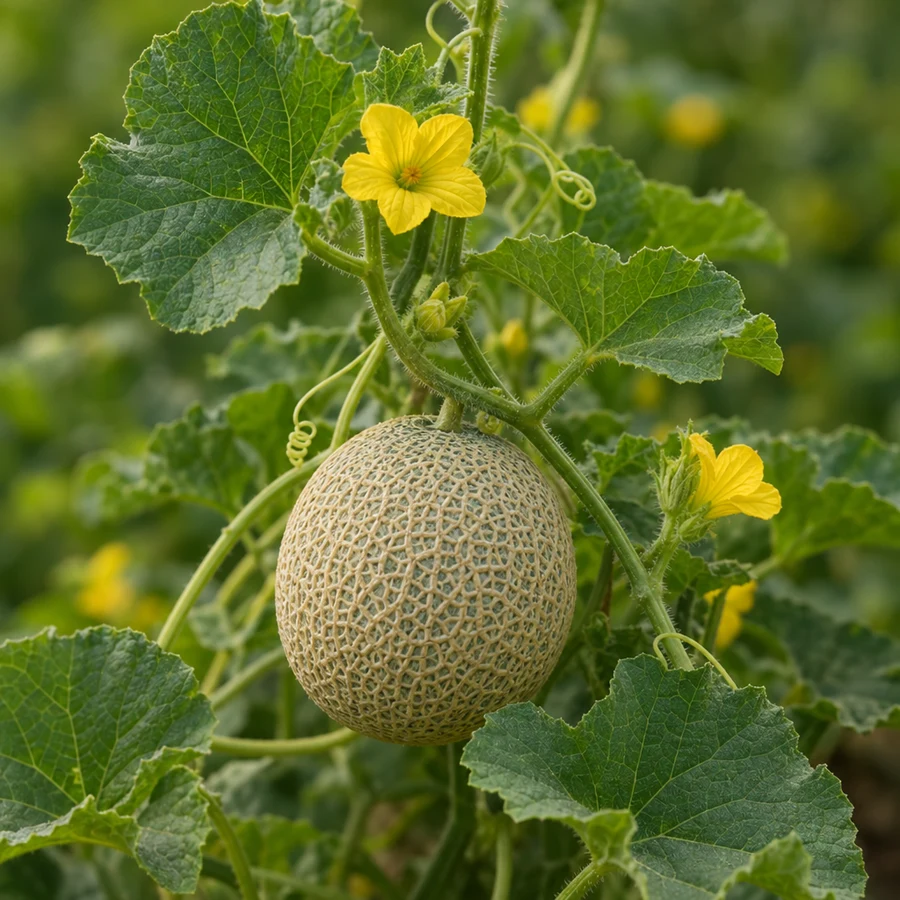
Pollination. The first flowers are all male and drop off; that's normal. A few days later female flowers appear, each with a tiny melon behind the petals. Bees carry the pollen between them. If fruit isn't setting, cool wet weather or too few bees are the usual reasons, and you can hand-pollinate the same way you would squash. A few pollinator flowers nearby, like sunflowers or lavender, keep the bees coming.
For planting out alongside the rest of the squash family, see plant out squash and cucumbers.
Keeping it happy
Watering. Give melons about 1-2 inches of water a week from rain or the hose, soaked in deeply rather than sprinkled often. Drip lines or soaker hoses are ideal because they keep the leaves dry, and wet leaves invite mildew. If you water by hand, do it in the morning. A mulch of straw, or the black plastic you planted through, holds moisture and keeps weeds down (mulching in spring).
Ease off as the fruit ripens. In the last two weeks or so before harvest, cut back on watering. A flood of water then can split the fruit and water down the flavor.
Pinching vines. Some growers pinch the vine tips once they reach 3-5 feet to push the plant's energy into fruit. It's optional. What does help, about a month before your first fall frost, is to pick off new flowers and any fruit too small to ripen in time, so the plant finishes the melons it already has.
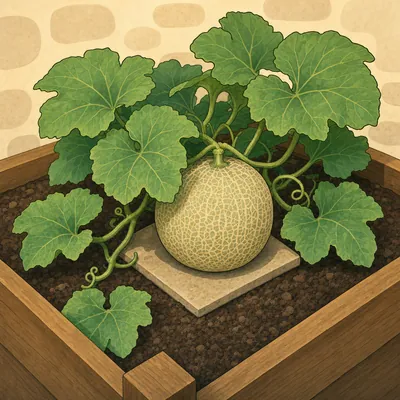
Lifting the fruit. Melons on a trellis need a sling of old stockings, netting or soft cloth tied to the frame. On the ground, set each fruit on a board, tile or a bit of straw to keep it dry and away from slugs and rot.
Trouble in the bed
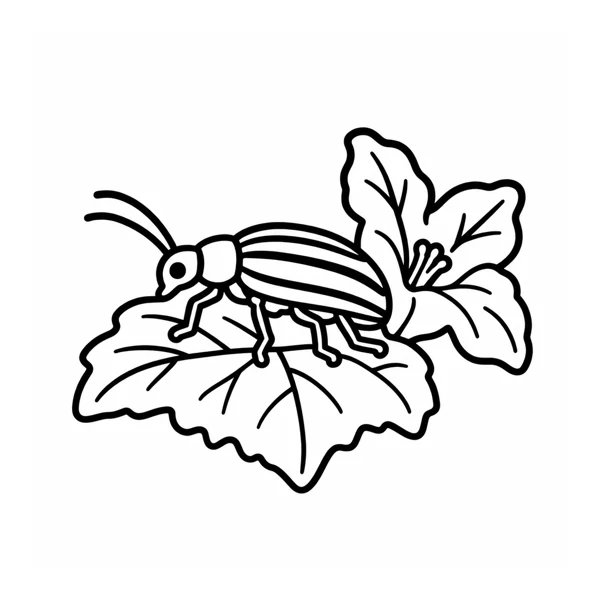
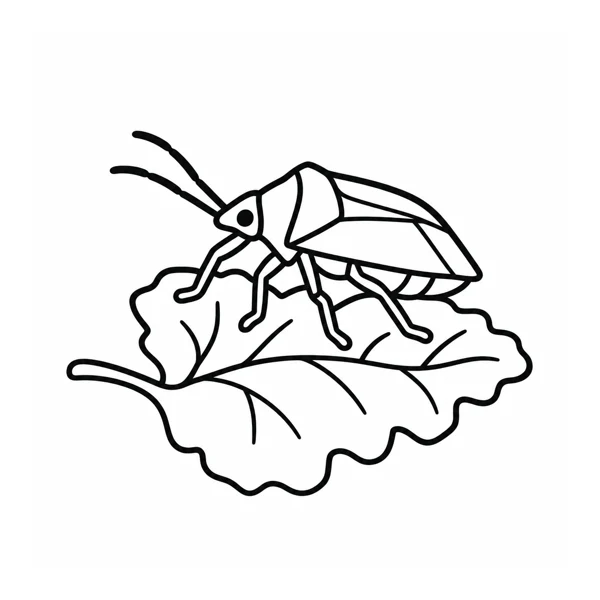
Pests. Striped and spotted cucumber beetles are the big one. They chew seedlings and spread bacterial wilt, so row covers early in the season are worth the trouble. Aphids, squash bugs, squash vine borers and spider mites also turn up, and whiteflies can be a nuisance in warm regions. Check the undersides of leaves often; insecticidal soap handles aphids and mites when caught early. See June garden pests for more.
Diseases. These are the ones that trouble melons most:
- Powdery mildew: white, floury patches on leaves, usually from midsummer on. See powdery mildew in late summer.
- Downy mildew: yellow, angular spots on top of the leaf with gray-purple fuzz underneath; worst in humid, wet weather.
- Bacterial wilt: whole vines suddenly wilt and don't recover. Cucumber beetles carry it. Muskmelons are hit far harder than watermelons.
- Fusarium wilt: a soil-borne wilt that yellows and kills vines. Rotate and choose resistant varieties.
- Alternaria leaf blight: brown spots with target-like rings, starting on older leaves.
- Anthracnose: dark, sunken spots on leaves, stems and fruit; especially hard on watermelon.
- Gummy stem blight: cracked stems that ooze an amber gum, plus brown leaf spots; also rots fruit.
- Cucumber mosaic virus: mottled, crinkled leaves and stunted plants, spread by aphids. Pull infected plants; there's no cure.
The best defenses are the same for most of them: rotate where you grow the squash family each year (crop rotation against disease), water at the soil instead of over the leaves, give plants air, choose disease-resistant varieties, and clean up diseased vines in fall.
Good neighbors





Melon companions are mostly about using space well. Quick crops can share the bed in spring and be finished before the vines run: radishes, lettuce, spinach, peas, beets and carrots. Onions and garlic fit along the edges, and corn can grow on the north side without shading the vines.
Cucumber is often listed as a companion, but it shares melon's beetles and diseases, so planting them side by side mostly gives the problems a bigger buffet. If you grow both, spread them apart and rotate them together.
Seeds that grow well in your area in November
Affiliate links — shopping through these helps keep Evening Vines free. Smooth Blue Aster
 Polka Dot Mix
 Black-Eyed SusanSeeds
 ColumbineSeeds
Varieties worth growing
Muskmelons (cantaloupe types): orange flesh, netted rind, and they slip from the vine when ripe. 'Hale's Best' is an old favorite. 'Minnesota Midget' is a small, early melon for short summers and small spaces.
Galia: a green-fleshed F1 hybrid with a netted rind that turns from green to yellow as it ripens. It was bred in Israel from 'Ha'Ogen' and 'Krymka' and released in 1973. Because it's a hybrid, saved seed won't come true.
Honeydew: smooth, creamy-yellow rind and pale green, sweet flesh, a little milder than muskmelon. It needs a longer, warmer season than most muskmelons.
Watermelon: red or yellow flesh, seeded or seedless. Small "icebox" types such as 'Sugar Baby' ripen sooner and suit cooler areas; big picnic types like 'Crimson Sweet' need a long, hot summer. See Watermelon for more.
In the north, read the days to harvest on the packet before anything else (how to read a seed packet).
Melons seeds to buy
Affiliate links — shopping through these helps keep Evening Vines free.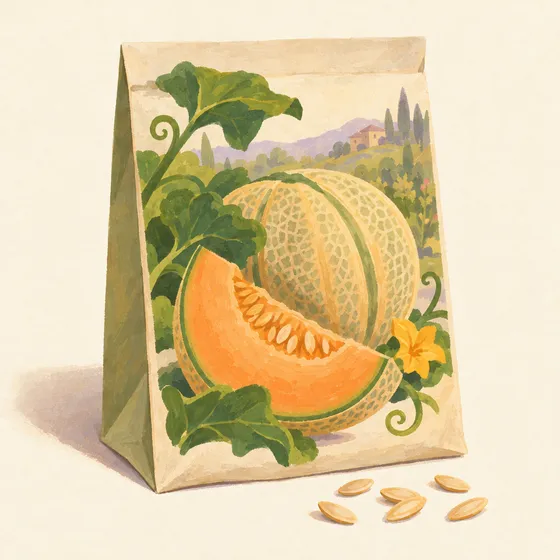 Honey Rock
Picking notes
When melons ripen depends on your zone and sowing date: anywhere from midsummer in warm areas to early fall in the north. Muskmelons are usually ready about 35-45 days after their flowers are pollinated. Once they start, check every other day, then daily at the peak.
Is it ripe?
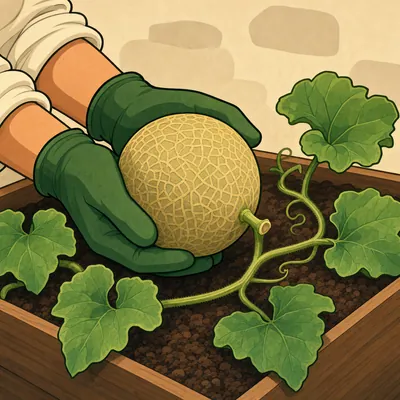
- Muskmelon: the rind turns from green to tan or yellow between the netting, it smells sweet, and the stem starts to crack where it meets the fruit. At "full slip" the melon comes away with a gentle push of your thumb. If you have to tug, wait.
- Watermelon: look at the curly tendril nearest the fruit; when it's brown and dry, that's a good sign. The pale spot where the melon sits on the ground turns from greenish white to creamy yellow, and the rind goes from shiny to dull. Use all three signs together.
- Honeydew: it won't slip, so cut it once the rind is evenly creamy yellow and the blossom end gives slightly when pressed.
There's more detail, with pictures, in how to tell when melons are ripe.
Saving seed for next year
Melon seed is easy to clean and dry. Keeping it true takes more planning.
- Start with open-pollinated varieties. Hybrids (marked F1, like Galia) won't grow the same melon next year.
- Muskmelons cross with each other. Muskmelon, cantaloupe, honeydew, Galia and Charentais are all one species and swap pollen freely. Seed savers' guides suggest anything from 800 feet to half a mile between varieties, which few gardens have. The easy way is to grow just one kind, or hand-pollinate and tape or bag the flowers shut.
- Watermelon won't cross with muskmelon, and neither will cross with squash or cucumbers. You can grow one watermelon and one muskmelon and save both.
To save the seed, let the chosen fruit get fully ripe (eating ripe is fine for melons), scoop out the seeds, and rinse off the pulp in a sieve. Spread them on a screen or plate somewhere cool and airy for about two weeks, until they snap rather than bend. Store them in a labeled jar somewhere cool and dry. More in saving seeds from your garden and storing leftover seeds.
From garden to table
All melons are mostly water and low in calories. Watermelon is about 91% water, which is why it tastes so good on a hot day.
The vitamins differ by type. Orange-fleshed muskmelon is the vitamin A melon, thanks to its beta-carotene, and it's a good source of vitamin C too. Honeydew gives mainly vitamin C, with very little vitamin A. Watermelon has more modest amounts: about 3% of the daily value for vitamin A and 9% for vitamin C in 100 grams. All of them add some potassium.
Most melons get eaten fresh, straight from the garden, but they're also good in fruit salads, salsas, smoothies and sorbets. Extra melon freezes well in cubes for smoothies (freeze your summer harvest).
Questions from the potting bench
Why aren't my melons sweet? Usually they were picked too early, or the season was cool and cloudy. Heavy watering in the last couple of weeks, leaves lost to disease, and short-on-potassium soil can all water down the flavor too.
Can I grow melons in zone 3 or 4? Yes, with some help. Choose short-season varieties (about 65-80 days), start them indoors 3-4 weeks ahead in individual pots, plant into black plastic once the soil reaches 65°F, and use row cover until the flowers open.
Will my melons cross with my cucumbers or squash? No. They're different species. Different muskmelon and honeydew varieties will cross with each other, but that only matters if you save the seed; this year's fruit tastes the same.
Can I grow melons in a container or on a trellis? Small-fruited varieties manage in a large container (at least 5 gallons) or on a sturdy trellis, as long as they get full sun and steady water. Support each fruit with a sling as it grows.
My first flowers all fell off. What's wrong? Nothing. Melons open male flowers first, and those drop after shedding pollen. The female flowers, with a tiny melon behind them, follow a few days later.
Grower reports
How did Melons do in your garden? Members rate it and say which zone and month they planted, so everyone can see what works near them.
Recent community discussions
No one has talked about Melons yet. Be the first.
Seeds to try
Affiliate links — shopping through these helps keep Evening Vines free.Essentials for Growing Melons
 Grow Bags
Breathable fabric pots: grow almost anything on a patio, balcony or driveway, and roots never circle.
See it →
 Trellis Netting
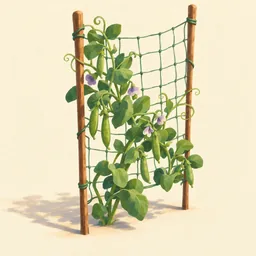
Strong netting for peas, beans, cucumbers and melons to climb: more crop in less space.
See it →
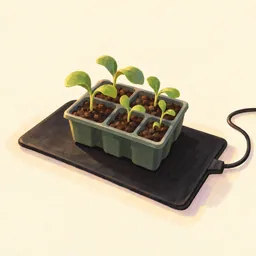 Seedling Heat Mat
Gentle bottom heat so peppers, tomatoes and eggplant sprout in a cool house.
See it →
 Soaker Hose
Waters the roots slowly, not the leaves: less disease, less water, less work.
See it →
 Organic Fertilizer
Slow-release organic plant food for vegetable beds and containers.
See it →
 Garden Hand Tools
Trowel, transplanter and cultivator: the three tools you reach for most.
See it →
