
Peas
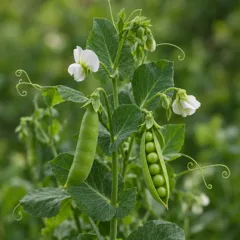
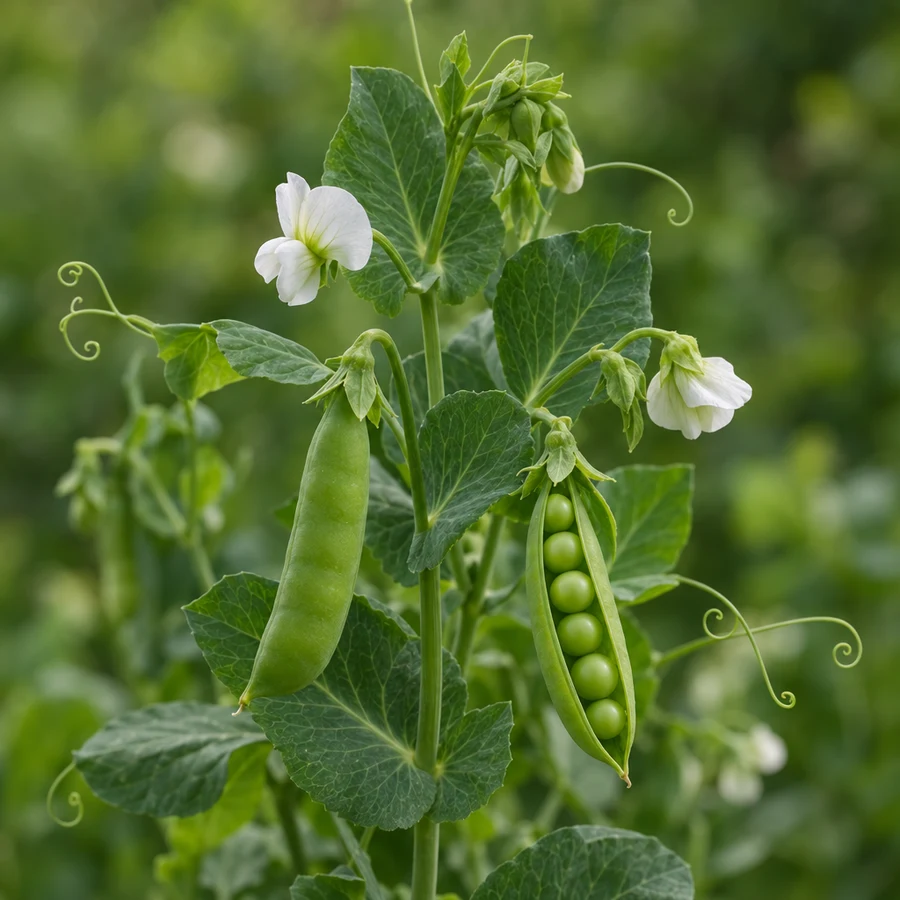
Peas are sweet, cool-season crops you can grow as shelling peas, sugar snaps, or snow peas. Most climb, and like other legumes they team up with soil bacteria to make some of their own nitrogen.
Recent community discussions
No one has talked about Peas yet. Be the first.
At a glance
| Botanical name | Pisum sativum |
| Plant type | Vegetable (legume) |
| Annual or perennial | Annual |
| Season by zone | Spring sowing in zones 3 to 7; fall-into-winter sowing in zones 8 and up |
| Soil pH | 6.0 to 7.5 |
| Planting depth | 1 inch |
| Spacing | 2 inches apart, no thinning needed |
| Days to germinate | Depends on soil warmth: about 9 days at 60°F, a month or more at 40°F |
| Days to maturity | 55 to 70 (most varieties near 60) |
| Sun | Full sun |
| Water | A good soak each week, about an inch, more when pods are filling |
From planting to harvest
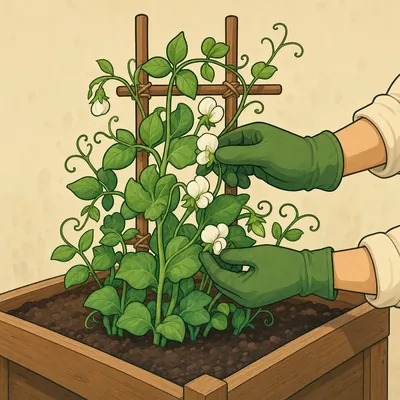
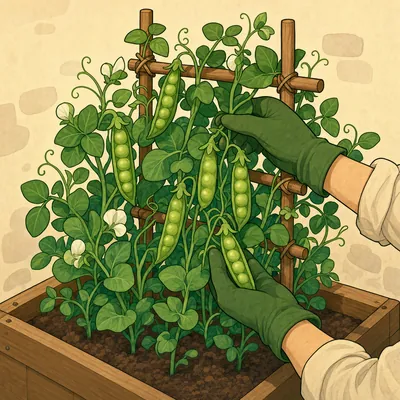
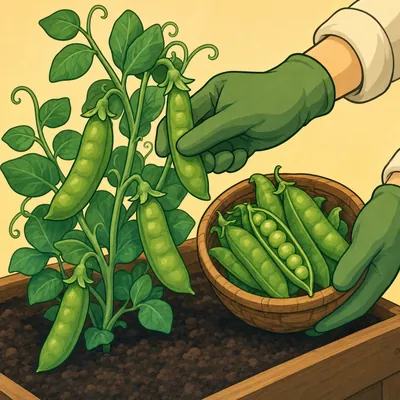
Is it peas weather where you are? See everything to plant this month or read your zone notes.

Direct sow as soon as soil reaches 40°F (4°C), 4–6 weeks before last frost. In cool zones, sow again in late summer for fall harvest.

60–75 days; snap/snow peas earlier.

Zones 3–9, late spring?early summer; garden peas June?July; snow/snap peas earlier when pods still flat.

Fertile, well-drained silty loam or sandy loam, pH 6.0–7.5. Prefers cooler soils; avoid waterlogging.
Pests to watch for






A little history
Peas were among the first crops people grew, in the Near East thousands of years ago. They spread across Europe and Asia to become a garden staple.
When to sow in your zone
Spring: Sow outdoors 4 to 6 weeks before your last frost. Peas will sprout once the soil reaches 40°F, but slowly; they come up much faster when it's nearer 60°F. Our count back from last frost post shows how to find your date, and sow peas early in spring walks through the day itself.
Fall and winter: In zones 8 and up, sow from late summer into fall for peas through the cool months. In colder zones, take the variety's days to maturity, add about 2 weeks for the slower fall days, and count that back from your first frost date. For most varieties that lands around 8 to 10 weeks before frost. Peas shrug off a light frost, so the last pickings can run a little past it.
Find your pea dates: enter your ZIP on What to Plant or open your zone page from the zones list. Reading this in November or December? Only gardens in zone 8 and warmer can sow now; everyone else waits for late winter or early spring.
Growing it, step by step
From seed
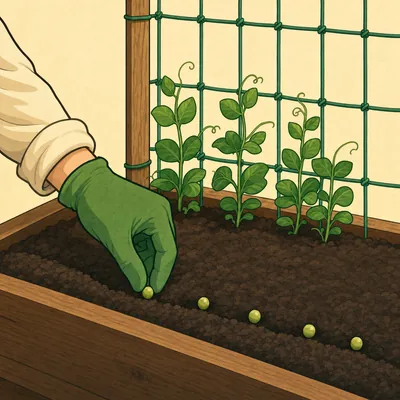
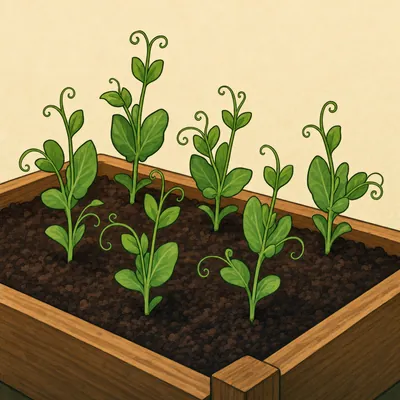
Sow 1 inch deep and 2 inches apart, and let them all grow; there's no need to thin. A pea inoculant helps in beds that haven't grown peas before.
Moving it outside
Direct sow when you can. Peas dislike having their roots disturbed.
Water
Give the bed a deep drink about once a week, aiming at the soil rather than the leaves. Don't let it dry out once flowers and pods appear.
Mulch
Once the seedlings are up and the soil has warmed, spread 3 to 4 inches of weed-free straw or dry grass clippings around them. It keeps the roots cool and holds moisture as the days lengthen.
Feeding
Skip nitrogen, which gives leafy vines with few pods. Compost at planting is enough.
Keeping it happy
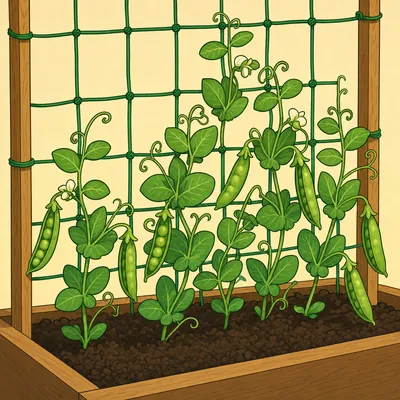
Tall vines can reach about 5 feet, so give climbing types a trellis 4 to 6 feet high before they start to sprawl (see staking and supporting plants). Dwarf types manage with a few twiggy sticks. Pick every couple of days so the vines keep flowering.
Once the days sit around 80 to 85°F, the vines stop flowering and the pods turn starchy. That's the end of the spring crop: pick every pod that's left, then cut or pull the vines. Leaving the roots in the soil is a small gift to whatever grows there next.
Trouble in the bed
Pests
- Aphids: Knock them off with a strong spray of water or use insecticidal soap. They matter more than they look, because they carry viruses.
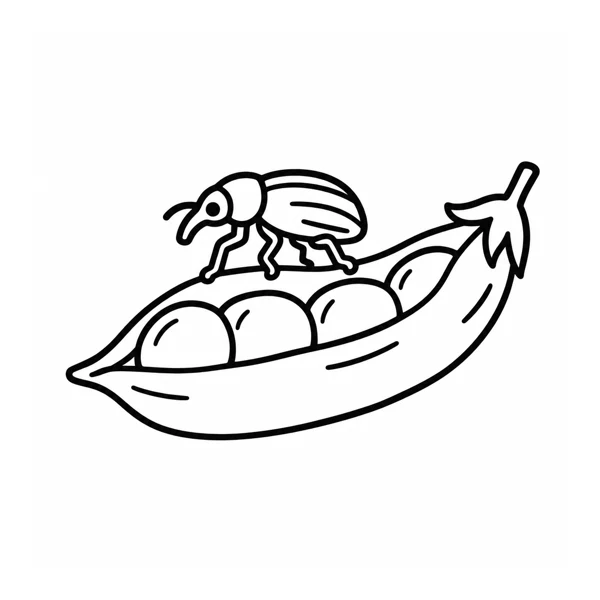
- Pea weevil: Small beetles that lay eggs on young pods; the grubs feed inside the seeds. Clear old vines away after harvest.
- Thrips and leafminers: Thrips scar pods; leafminers leave pale winding trails in leaves. Pick off badly mined leaves.
- Cutworms: They snip seedlings at soil level. Look under the soil surface near damaged plants in the evening.
Diseases
- Powdery mildew: A white dust on leaves, worst late in the season. Space plants for airflow and choose resistant varieties.
- Fusarium wilt and root rot: Use well-drained soil, grow resistant varieties, and move peas to a new bed each year (our crop rotation plan helps).
- Pea enation mosaic virus (mosaic virus): Spread by aphids, it mottles and curls new leaves and twists the pods. There's no cure; pull infected plants, and grow resistant varieties where it's common.
Good neighbors






Peas share the cool weeks with lettuce, spinach, and radishes, so they make easy bedfellows: the salad crops fill the ground at the foot of the trellis. When the vines come out in early summer, the bed suits a hungry summer crop such as corn or summer squash.
Old garden lore says to keep onions, garlic, and chives away from peas. That's gardeners' tradition handed down, not something research has settled, so treat it as a gentle rule of thumb rather than a must.
Seeds that grow well in your area in November
Affiliate links — shopping through these helps keep Evening Vines free. PhloxSeeds
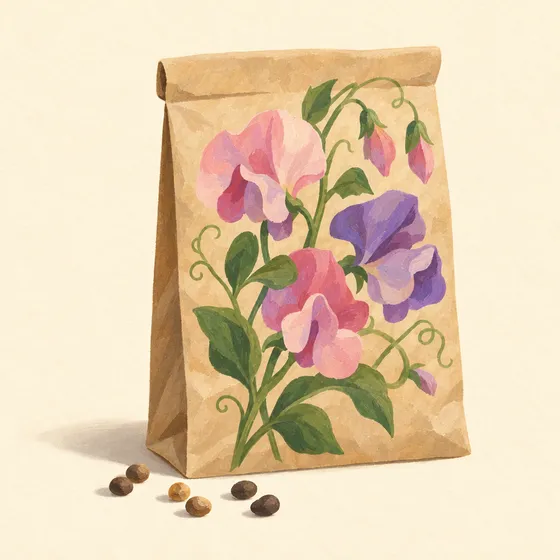 Royal Mix
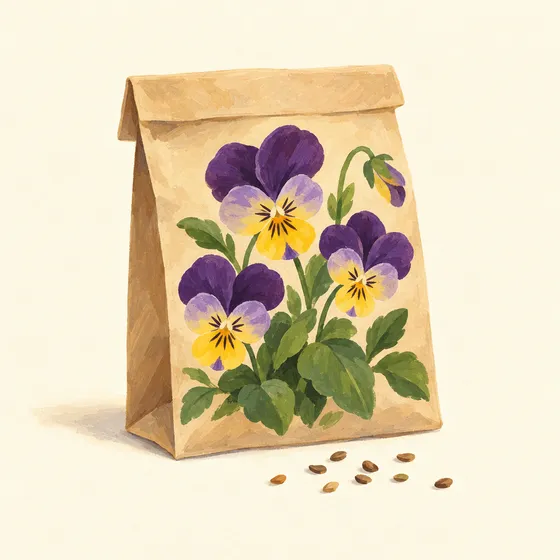 Johnny Jump Up
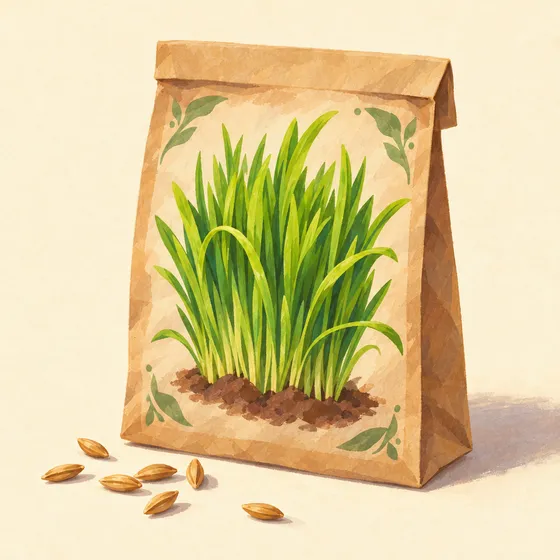 Organic Cat Grass
Varieties worth growing
Peas seeds to buy
Affiliate links — shopping through these helps keep Evening Vines free.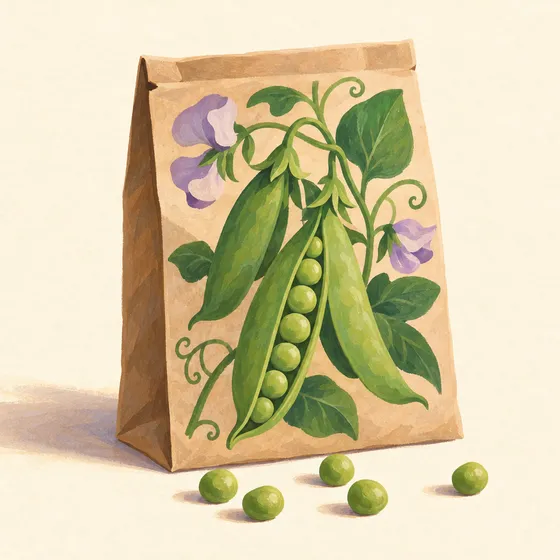 Sugar Snap
Picking notes
Pick snow and snap peas when pods are plump but tender, and shelling peas when pods are full and bright green. Eat soon, since sugars turn to starch.
Saving seed for next year
Peas mostly pollinate themselves, so they're easy to save. Let pods dry brown on the vine, then shell and store the seeds cool and dry. More in saving seeds from your garden.
From garden to table
Peas give protein, fiber, and vitamins C and K. Eat raw, steamed, or stir-fried. Sweet pea flowers (Lathyrus odoratus) look similar, but their seeds are poisonous.
Questions from the potting bench
Why do peas stop in summer? Heat. Once days hold around 80 to 85°F they stop flowering. Pick what's left, then sow earlier next spring, or again for fall.
Do peas need a trellis? Most do. Dwarf types need less.
Can I eat the pods? Only snow and snap pea pods. Shelling pea pods are tough.
How far apart should I sow peas? About 2 inches apart and 1 inch deep, with no thinning afterward.
Grower reports
How did Peas do in your garden? Members rate it and say which zone and month they planted, so everyone can see what works near them.
Recent community discussions
No one has talked about Peas yet. Be the first.
Seeds to try
Affiliate links — shopping through these helps keep Evening Vines free.Essentials for Growing Peas
 Grow Bags
Breathable fabric pots: grow almost anything on a patio, balcony or driveway, and roots never circle.
See it →
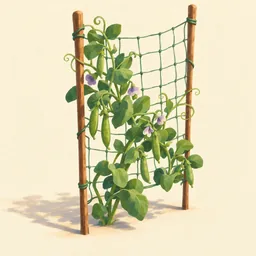 Trellis Netting
Strong netting for peas, beans, cucumbers and melons to climb: more crop in less space.
See it →
 Plant Labels
Waterproof markers so you know what's coming up where.
See it →
 Garden Hand Tools
Trowel, transplanter and cultivator: the three tools you reach for most.
See it →
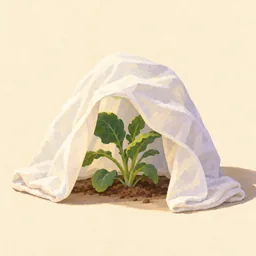 Frost Cloth
Throw it over young plants on cold spring and fall nights.
See it →
 Organic Fertilizer
Slow-release organic plant food for vegetable beds and containers.
See it →
