
Bachelor's Buttons
Bachelor's buttons, also called cornflowers, are cheerful, easy annuals with fringed blue flowers on slender stems. They grow 1 to 3 feet tall and bloom for weeks in late spring and early summer. Blue is the classic color, but you can also find pink, white, maroon, and near-black.
They're cool-season plants that shrug off light frost and poor soil. Bees and butterflies love them, they make lovely cut flowers, and once you've grown them they often come back from self-sown seed. If you're planning a patch for pollinators, they fit right into a pollinator border.
Recent community discussions
No one has talked about Bachelor's Buttons yet. Be the first.
At a glance
| Plant type | Hardy annual flower, edible flower |
| Botanical name | Centaurea cyanus |
| Annual or perennial | Hardy annual; often self-sows |
| Sun | Full sun |
| Water | Moderate; tolerates dry spells |
| Spacing | 6 to 12 inches |
| Planting depth | 1/4 inch |
| Days to germinate | 7 to 14 |
| Days to maturity | About 60 to 70 days to bloom |
| Best USDA zones | 2 to 11 as an annual |
| Soil pH | 6.0 to 7.0; tolerates a wider range |
Is it bachelor's buttons weather where you are? See everything to plant this month or read your zone notes.

Early spring or late summer. Sow 2–4 weeks before last frost, or direct sow after. Fall: sow late summer in mild zones.

Germinates in 7–14 days; blooms in 50–75 days; self-seeds.

Zones 2–8, May?September; Zones 9–11, October?December; indoors year-round.

Dry, poor sandy soils, pH 6.0–7.5. Very tolerant of low fertility and drought.
Pests to watch for





Diseases
Mateo is researching the diseases that affect this plant.
A little history
Cornflowers are native to Europe, where they once grew wild in grain fields, which is how they got the name. They came to North America with settlers and now grow wild in many places. The cornflower is the national flower of Estonia and a much-loved symbol in Germany. The name "bachelor's button" is said to come from young men wearing the flower when courting. Another explanation is simply the shape: each small, round flower head looks a little like a button.
When to sow in your zone
Spring: Sow outdoors 4 to 6 weeks before your last frost date. Seedlings handle light frost, and early sowing gives earlier blooms before summer heat. Not sure of your date? Count back from your last frost to find your sowing week.
Fall, zones 7 to 11: Sow in early to mid fall so seedlings settle in before cold weather, overwinter, and bloom early the next spring. In the warmest zones, fall-sown plants flower in late winter and spring. See your zone page for local timing: zone 7, zone 8, zone 9, zone 10, zone 11.
Late fall, zone 6 and colder: Wait until the ground is cold, then scatter seed. It will sit dormant over winter and sprout in spring. Winter sowing in milk jugs works well for them too.
Growing it, step by step
From seed
Direct sowing works best, because the plants dislike root disturbance. Sow seed 1/4 inch deep, then thin to 6 to 12 inches. Keep the soil lightly moist until seeds sprout. Sow every 2 to 3 weeks in spring for continuous bloom.
Moving it outside
Most growers never need to start them indoors. If you'd like a head start, sow in biodegradable pots about 4 to 6 weeks before you plan to set plants out, so the roots go into the ground without being disturbed. Harden the seedlings off and plant out around your last frost date. They can take a light frost, so there's no need to wait for warm weather.
Water
Water regularly while plants are young. Once established, they need only moderate water and handle dry spells well.
Mulch
Mulch lightly to hold moisture. Skip heavy mulch on fall-sown beds, because the seedlings need to push through.
Feeding
Skip it. Rich soil and extra nitrogen give floppy plants with fewer blooms.
Keeping it happy
Deadhead spent flowers to keep blooms coming. Tall types may flop, so plant them close together or give them a little support. When plants look tired in midsummer heat, pull them and sow another round. Leave a few seed heads if you'd like self-sown plants next year.
Trouble in the bed
Cornflowers are tough and rarely troubled, and most problems come from crowding, shade, or wet soil.
Pests
- Aphids: Hose them off or use insecticidal soap. Ladybugs and lacewings usually keep them in check.
- Mealybugs: Wipe off small clusters or spray with insecticidal soap.
- Grasshoppers: Hand-pick in the morning when they're slow, and keep nearby grass trimmed.
Diseases
- Rust: Orange-brown spots on the leaves. Remove infected leaves and avoid wetting the foliage.
- Downy mildew: Pale patches on top of the leaves with fuzzy growth underneath, worst in cool, damp weather. Space plants for airflow and water at the base.
- Aster yellows: Stunted, bushy growth and green, twisted flowers. Pull infected plants. Row cover keeps out the leafhoppers that spread it.
- Wilt and root or stem rots: Usually a sign of soggy soil or crowding. Grow in well-drained soil and thin seedlings properly.
Good neighbors






Good: Poppies, larkspur, calendula, snapdragons, zinnias, and cosmos. They're also lovely in a vegetable garden, where they draw pollinators.
Avoid: Rich, wet beds, and tall, fast growers that will shade them.
Seeds that grow well in your area in November
Affiliate links — shopping through these helps keep Evening Vines free. Moonbeam
 Foxglove Mix
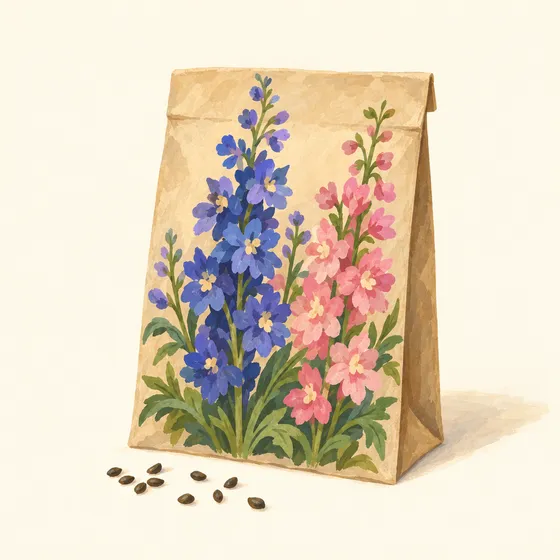 Rocket Larkspur
 Wild Lupine
Varieties worth growing
- Blue Boy: The classic tall, true-blue type, good for cutting.
- Black Ball: Deep maroon, nearly black flowers on tall stems. Seeds
- Polka Dot Mix: A shorter mix of blue, pink, white, and maroon. Seeds
- Jubilee Gem: A compact blue type for pots and edges.
- Florence series: Compact plants with strong stems in several colors.
- Classic Magic: A mix of rich, old-fashioned colors.
Bachelor's Buttons seeds to buy
Affiliate links — shopping through these helps keep Evening Vines free. Polka Dot Mix
Picking notes
Cut flowers for bouquets in the morning, just as the buds start to open and show color. Strip the lower leaves. Frequent cutting keeps plants blooming. For edible petals, pick open flowers and pull the petals from the base.
Saving seed for next year
Let some flowers go to seed. Once the heads turn brown and papery, cut them, dry them in a paper bag, and shake out the seed. Store it cool and dry. Varieties cross, so keep them apart if you want pure colors. More on this in saving seeds from your garden.
From garden to table
The petals are edible, with a mild flavor. Scatter them on salads, cakes, and drinks, but only if they were grown without chemical sprays. They also dry well for crafts and potpourri.
Questions from the potting bench
I live in zone 8. Can I sow them now, in the fall? Yes. In zones 7 to 11, fall sowing gives you sturdier plants and earlier flowers next spring. In zone 6 and colder, wait for cold ground in late fall so the seed stays dormant until spring.
Mine fell over after the first heavy rain. What went wrong? Usually too much shade, too much fertilizer, or plants spaced too far apart. Give them full sun and lean soil, and grow them in a close group so the stems hold each other up.
Will I have to sow them again next year? Often not. Leave a few flowers to set seed and new seedlings usually turn up the next spring. Thin them out where you don't want them.
Can I put the petals on a cake? Yes, as long as the plants were never sprayed. Pull the petals from fresh, open flowers and scatter them just before serving.
Grower reports
How did Bachelor's Buttons do in your garden? Members rate it and say which zone and month they planted, so everyone can see what works near them.
Recent community discussions
No one has talked about Bachelor's Buttons yet. Be the first.
Seeds to try
Affiliate links — shopping through these helps keep Evening Vines free.Essentials for Growing Bachelor's Buttons
 Grow Bags
Breathable fabric pots: grow almost anything on a patio, balcony or driveway, and roots never circle.
See it →
 Pruning Shears
Sharp bypass pruners for harvesting, deadheading and tidying.
See it →
 Seed Starting Tray
Reusable tray with a clear dome to give seeds a warm, humid start indoors.
See it →
 Garden Kneeler
A kneeling pad that flips into a seat: easier on knees and back.
See it →
 Plant Labels
Waterproof markers so you know what's coming up where.
See it →
 Organic Fertilizer
Slow-release organic plant food for vegetable beds and containers.
See it →
