
Coreopsis
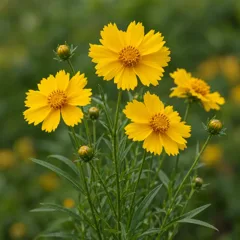
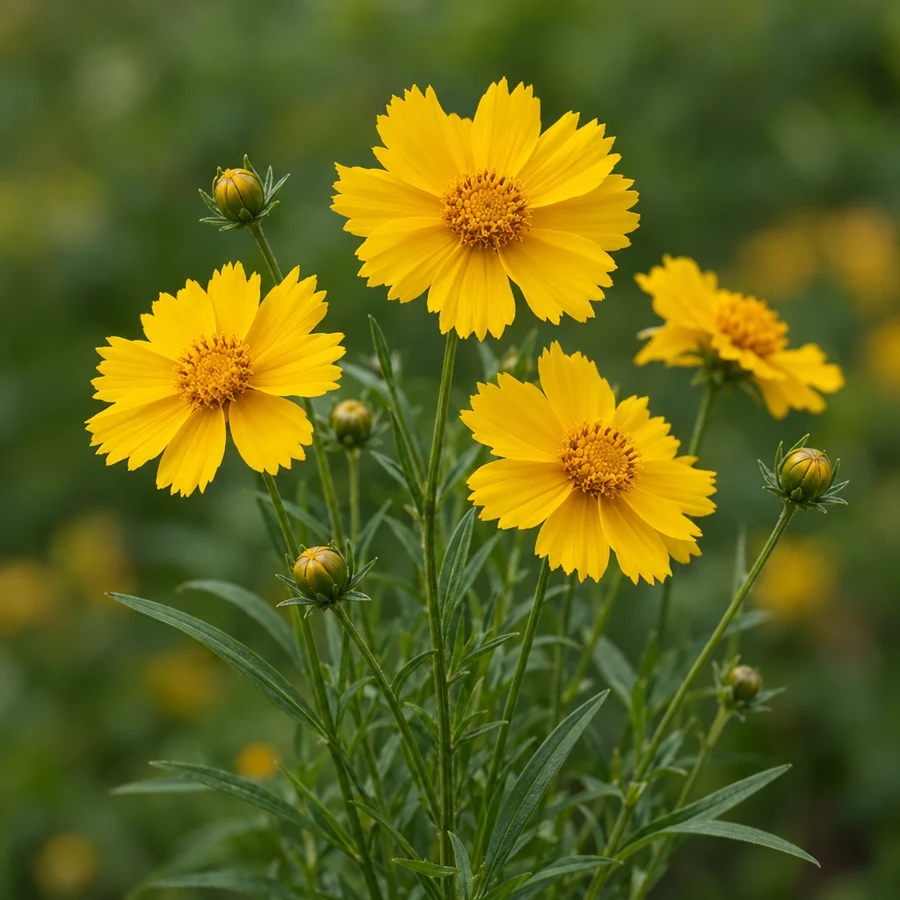
Coreopsis, also called tickseed, is a tough North American wildflower that covers itself in yellow, gold, pink or red daisies from early summer until frost. Large-flowered types bloom hardest from June to August. It asks for sun and soil that drains, and very little else, and the bees and butterflies find it within a day of the first flower opening.
There are two kinds to know before you buy seed. Annual coreopsis, like plains coreopsis, flowers the same summer you sow it and often seeds itself for next year. Perennial coreopsis comes back for years, but most perennial types grown from seed spend their first summer making leaves and roots, then flower properly in year two. If you want flowers this year from a perennial, start Early Sunrise indoors early or buy young plants.
Recent community discussions
No one has talked about Coreopsis yet. Be the first.
At a glance
| Plant type | Flower |
| Botanical name | Coreopsis spp. |
| Annual or perennial | Perennial (some annual species) |
| Sun | Full sun |
| Water | Low once established |
| Spacing | 12 to 18 inches |
| Planting depth | Surface sow |
| Days to germinate | 10 to 21 |
| Days to maturity | About 60 to 90 days to bloom for annual types and Early Sunrise; most perennials bloom in their second year from seed |
| Best USDA zones | About 3 to 9, depending on species |
| Soil pH | 6.0 to 7.5 |
Is it coreopsis weather where you are? See everything to plant this month or read your zone notes.

Direct sow outdoors in spring after last frost. Can also be fall sown in mild climates for earlier blooms.

Germinates in 7–21 days; blooms in 60–90 days; self-seeds.

Zones 3–9, June?October; in mild zones April?July; indoors year-round with light.

Poor, dry sandy soils, pH 6.0–7.5. Thrives in low fertility and drought once established.
Pests to watch for







A little history
Most coreopsis species are native to North America. The name comes from Greek words for "bug" and "like," because the flat little seeds look a bit like ticks, which is where "tickseed" comes from too. Native Americans used plains coreopsis to make yellow and red dyes, and home dyers still do. Florida made the whole genus its state wildflower in 1991, and you'll see it planted along roadsides there.
When to sow in your zone
Here's when to plant coreopsis in your zone. Dates are a guide; your own last frost date matters most, so count back from it (see Count back from your last frost) and check your zone on the zones page.
| Zone | Start indoors | Sow outdoors or plant out | Late-season sowing | |---|---|---|---| | 3 | Mid April | Early June | October, once the soil is cold | | 4 | Early April | Late May | Late October | | 5 | Mid March to early April | Mid May | November | | 6 | Early to mid March | Late April to early May | November | | 7 | Late February to early March | Mid to late April | November to December | | 8 | February | Late March to April | October to November | | 9 | January | February to March | September to November | | 10 and warmer | Outside the usual range | Try annual plains coreopsis in early spring | Fall, as for other wildflowers |
Spring: Start seed indoors 6 to 8 weeks before your last frost, or sow straight into the bed around the last frost date.
Late fall or winter: You can also scatter seed outdoors once the soil has turned cold. It sits through the winter, gets the cold spell that perennial types like, and comes up in spring. This works in cold zones as well as warm ones, and it's how many native-seed growers sow coreopsis. In mild-winter areas such as Florida, extension advice is to sow wildflower seed, coreopsis included, in late summer or fall. Milk jugs work well for this too: see Winter sowing in milk jugs.
Growing it, step by step
From seed
Press the seed onto the surface of damp seed-starting mix and don't cover it, or cover it with the thinnest dusting at most. It needs light to sprout, and buried seed is the most common reason nothing comes up. Expect sprouts in 10 to 21 days. Perennial native types, like lanceleaf coreopsis, often sprout more evenly if you keep the seed damp in the fridge for 4 to 8 weeks first. Our seed-starting mix recipe suits it well.
Moving it outside
Harden seedlings off for a week (see Hardening off seedlings), then plant them 12 to 18 inches apart after the last frost, at the same depth they sat in the pot.
Water
Water regularly until the plants are settled in, usually the first month or so. After that, coreopsis is very drought tolerant and only needs a drink in long dry spells.
Mulch
Use a thin layer and keep it pulled back from the base of the plant. Wet mulch against the crown invites crown rot.
Feeding
Usually none. Rich soil and extra feeding make tall, soft stems that flop open in the middle.
Keeping it happy
Snip off spent flowers through the summer, or wait until the first big flush fades in midsummer and shear the whole plant back by about a third. It fills in and blooms again within a few weeks. Our post on deadheading for more blooms shows how.
Perennial clumps get crowded and bloom less in the center over time. Lift and divide them every 3 to 4 years, in spring or early fall, and replant the young outer pieces. See Dividing perennials in fall. In fall, you can leave the last seed heads standing for the birds and tidy up in spring.
Trouble in the bed
Pests
- Aphids: Clusters on soft stem tips and buds. Knock them off with a strong spray of water. Root aphids can also feed below ground, so a plant that wilts in moist soil is worth checking at the roots.
- Slugs and snails: Hardest on young seedlings in damp weather. Clear away boards and debris they hide under, and hand-pick in the evening.
- Four-lined plant bug: Leaves small, sunken, brown spots that look a lot like leaf spot disease. The bugs drop and hide when you come near, so you often see the damage and never the culprit. Start looking in mid to late spring, hand-pick into soapy water, or use insecticidal soap on the young nymphs.
- Coreopsis beetle: A leaf-chewing beetle. Hand-pick when you spot it; a healthy clump usually shrugs off light feeding.
Diseases
- Leaf spot: Brown or dark spots on the leaves. Give plants room for air to move, water at the base, and pick off spotted leaves.
- Powdery mildew: White dusting on leaves in late summer. Same fixes as leaf spot. More in Powdery mildew in late summer.
- Rust: Orange powdery spots under the leaves. Remove affected leaves and clean up fallen ones in fall.
- Southern blight: A problem in hot, humid summers in the South. The plant collapses at the soil line, often with white threads on the stem. Dig it out with the soil around it.
- Crown rot: The base turns soft and dark and the plant dies. It comes from wet, heavy soil. Prevention is the only cure: plant in well-drained soil and keep mulch off the crown.
Good neighbors








Coreopsis is happiest with neighbors that want the same sunny, lean, dry spot. In our borders it pairs well with Echinacea, Black-Eyed Susan, Salvia, Lavender, Penstemons, Wild Bergamot, Milkweed and Aster, with ornamental grasses to soften the edges. Together they make a long run of flowers for pollinators from early summer into fall; see Sow a pollinator border.
Keep it away from shady corners and low spots that stay wet, and from heavy feeders that need rich, watered soil. It sulks in the first and rots in the second.
Seeds that grow well in your area in November
Affiliate links — shopping through these helps keep Evening Vines free. Wild Lupine
 Common Milkweed
 PansySeeds
 PhloxSeeds
Varieties worth growing
Easy from seed
- Early Sunrise: Semi-double gold flowers. Often blooms the first year from an early indoor start.
- Sunfire: Large-flowered golden yellow with a dark red eye; usually flowers in its second summer.
- Plains coreopsis (C. tinctoria): Annual, red and yellow, and the classic dye plant. Self-seeds. Seeds
- Lanceleaf coreopsis (C. lanceolata): The native yellow meadow type. Sow in fall or after a cold spell in the fridge.
Usually bought as plants
- Moonbeam: Pale yellow threadleaf. Hardy to zone 3. Seeds
- Zagreb: Golden, compact threadleaf. Hardy to zone 3.
- Mahogany Midget: Dwarf, deep red.
- Roulette: Mahogany red with yellow.
- Big Bang series: Long-blooming hybrids.
Coreopsis seeds to buy
Affiliate links — shopping through these helps keep Evening Vines free.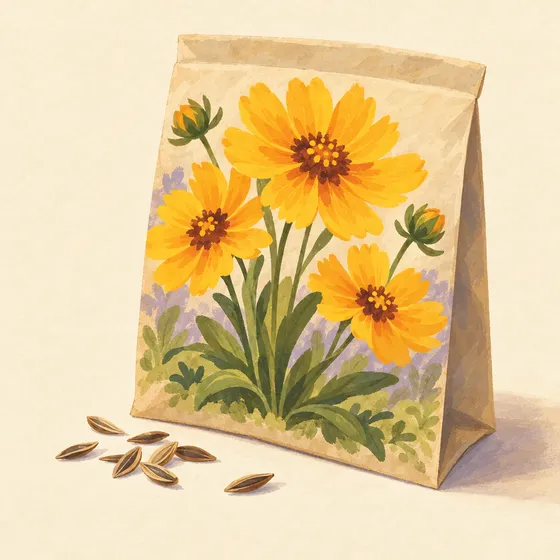 Moonbeam
Picking notes
There's nothing to eat here; the harvest is flowers. Coreopsis blooms from early summer to frost, and the more you cut, the more it makes. Cut stems in the cool of the morning when the flowers have just opened, and stand them straight in water. They last about a week in a vase.
Saving seed for next year
Leave a few flower heads on the plant until they turn brown and dry, then rub out the small, flat seeds over a bowl. Plains coreopsis and the wild species come close to true. Named cultivars and hybrids may not, and some, like Moonbeam, set little seed at all. Leave some heads for the goldfinches too. See Saving seeds from your garden and Store leftover seeds.
From garden to table
Not a food plant. Grown for beds, borders, meadows, pollinator plantings, cut flowers and natural dyes, with plains coreopsis giving yellows, oranges and rusty reds. It's also a reliable pick for dry, sunny slopes where little else is happy.
Questions from the potting bench
I sowed coreopsis and nothing came up. What went wrong? Most often the seed was covered too deeply. It needs light, so press it onto the surface and leave it uncovered. Perennial types may also need a cold spell first, so try sowing in late fall or chilling the seed in the fridge.
My seedlings grew well but never flowered. Is something wrong? Probably not. Most perennial coreopsis grown from seed spends its first summer building roots and flowers the next year. Annual plains coreopsis and Early Sunrise are the ones to choose if you want flowers in the first summer.
Why is my coreopsis flopping open in the middle? Usually the soil is too rich or the plant gets too much water, or the clump is old and crowded. Skip the fertilizer, shear it back by a third in midsummer, and divide it if it's been 3 or 4 years.
There are small brown spots on the leaves. Disease or bugs? It could be either. Four-lined plant bug leaves neat, sunken spots in late spring; leaf spot disease shows up more in wet weather. Look closely early in the morning for the bugs before you treat for disease.
When should I plant coreopsis in zone 6? Start seed indoors in early to mid March and plant out in late April to early May, or sow outdoors in November for spring seedlings. The table under When to Sow gives every zone.
Grower reports
How did Coreopsis do in your garden? Members rate it and say which zone and month they planted, so everyone can see what works near them.
Recent community discussions
No one has talked about Coreopsis yet. Be the first.
Seeds to try
Affiliate links — shopping through these helps keep Evening Vines free.Essentials for Growing Coreopsis
 Grow Bags
Breathable fabric pots: grow almost anything on a patio, balcony or driveway, and roots never circle.
See it →
 Pruning Shears
Sharp bypass pruners for harvesting, deadheading and tidying.
See it →
 Seed Starting Tray
Reusable tray with a clear dome to give seeds a warm, humid start indoors.
See it →
 Garden Kneeler
A kneeling pad that flips into a seat: easier on knees and back.
See it →
 Plant Labels
Waterproof markers so you know what's coming up where.
See it →
 Organic Fertilizer
Slow-release organic plant food for vegetable beds and containers.
See it →
